

CO-MAN Underwear Manufacturing Team
A professional underwear manufacturing team from CO-MAN with 19 years of experience in men's underwear production, product development, and OEM/ODM manufacturing for global brands.
4 Expert-Backed Steps to Choosing the Right Waistband for Men’s Underwear
For B2B buyers, a well-selected waistband contributes significantly to product quality and brand perception.
This guide will help you follow four key steps to ensure you select the optimal waistband for your men’s underwear OEM production.
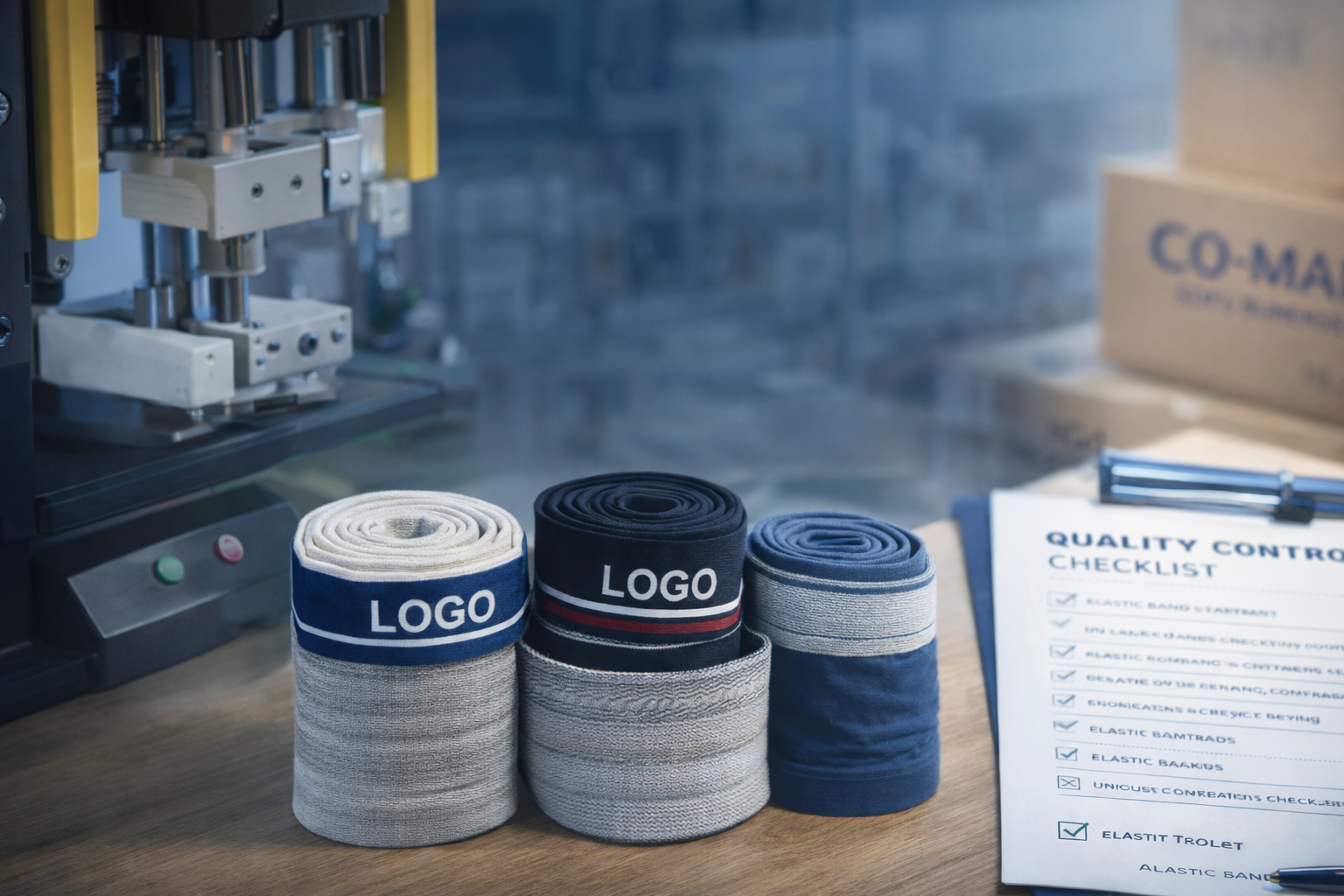
Table of contents
Step 1—Define Functional Requirements Based on End Use
Match Waistband Performance to Product Positioning
The first step is to define the intended usage of the underwear.
This helps determine how the waistband should perform, ensuring it matches the product’s functional needs.
Key questions B2B buyers should ask:
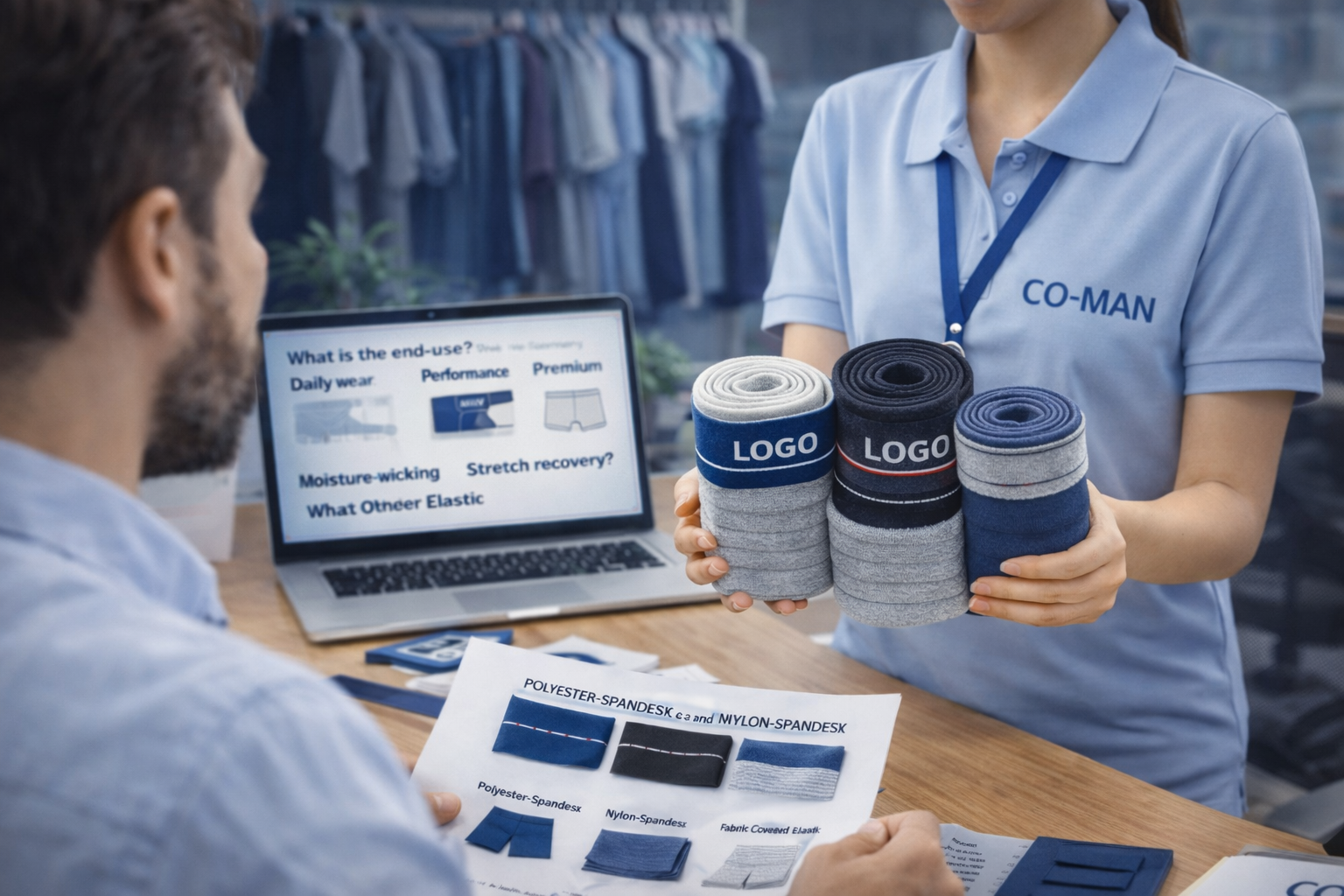
What type of underwear is being produced? (e.g., daily wear, sports, performance line)
How will the waistband impact comfort during activities like movement, sitting, and washing?
What kind of elasticity and fit recovery does the waistband need for the end user?
Sports underwear often requires waistbands that offer high stretch recovery and moisture-wicking properties.
For premium daily wear, comfort, softness, and style are the top priorities.
CO-MAN helps brands define waistband performance based on real end-use scenarios.
According to the latest market data, sports bras need to have a waistband with at least 20% elastic recovery rate to ensure comfort during intense exercise.
By evaluating elastic stretch recovery, moisture-wicking capability, and long-term comfort, CO-MAN ensures that waistband specifications are aligned with actual wearing conditions rather than assumptions.
CO-MAN has collaborated with several international sportswear brands, successfully utilizing a highly elastic composite spandex material to help these brands achieve consistent elasticity and comfort in large-scale production,For details, please click on this article: https://comanunderwear.com/customer_case_studie/how-can-we-help-an-e-commerce-brand-increase-its-mens-underwear-sales-by-15-times/
Discussion about Underwear Waistbands
Step 2—Select the Right Elastic Material and Band Composition
Elastic Bands: The Backbone of Waistband Comfort and Durability
The elastic band material directly influences the waistband’s performance. Quality elastic ensures a snug, supportive fit without sacrificing comfort.
Common waistband elastic types:
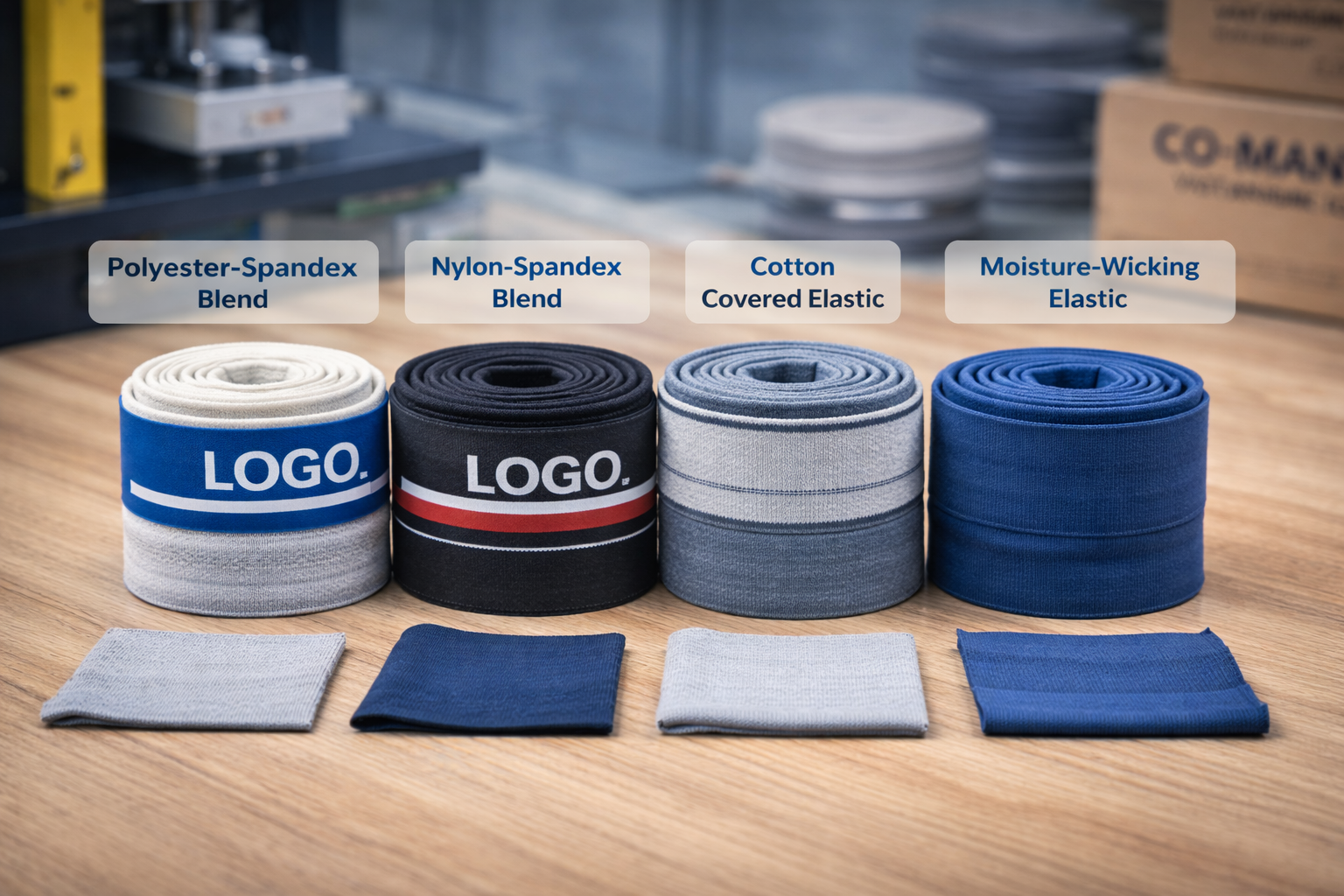
Polyester-spandex blends: Cost-effective, durable, and provides a good fit for standard daily wear
Nylon-spandex blends: Soft feel with higher stretch and recovery, ideal for premium lines
Cotton-covered elastics: Offers natural skin comfort with the support of elastic bands, suitable for luxury underwear lines
Elastic with moisture-wicking properties: Essential for active and sports underwear
It’s important to focus on:
Elastic stretchability: Ensuring comfort without excessive tightness
Elastic recovery: A good waistband should bounce back to its original shape after stretching
Shrinkage control: Quality elastics should maintain size consistency after repeated wash cycles
The right elastic ensures the waistband fits snugly, providing comfort and support through prolonged use.
Based on different underwear positioning, CO-MAN works with brands to match the most suitable elastic band composition—from polyester-spandex for cost-effective daily wear, to nylon-spandex and cotton-covered elastics for premium collections, as well as moisture-wicking elastics for active underwear lines.
During development, CO-MAN places strong emphasis on elastic stretchability, recovery performance, and shrinkage control, ensuring that the selected elastic maintains consistent tension, fit, and size stability throughout repeated washing and long-term wear.
This material-driven approach helps B2B buyers achieve reliable waistband performance while supporting scalable bulk production,for private label brands.
Elastic Type | Key Features | Best Use Case |
Polyester-Spandex | Cost-effective, stable | Daily underwear |
Nylon-Spandex | High stretch & recovery | Premium lines |
Cotton-covered Elastic | Skin-friendly | Luxury underwear |
Moisture-wicking Elastic | Fast-dry | Sports underwear |
Elastic Types
CO-MAN’s Waistband Materials
Not sure which waistband best fits your brand? Get expert advice now!
Our experienced consultants will help you choose the perfect material that balances comfort, function, and cost. Leave your info below and we’ll get back to you shortly.
Step 3—Evaluate Branding Integration with Waistband
Waistbands as Brand Identity Pieces
For B2B buyers, the waistband also serves as a primary branding surface, offering a unique opportunity for brand differentiation.
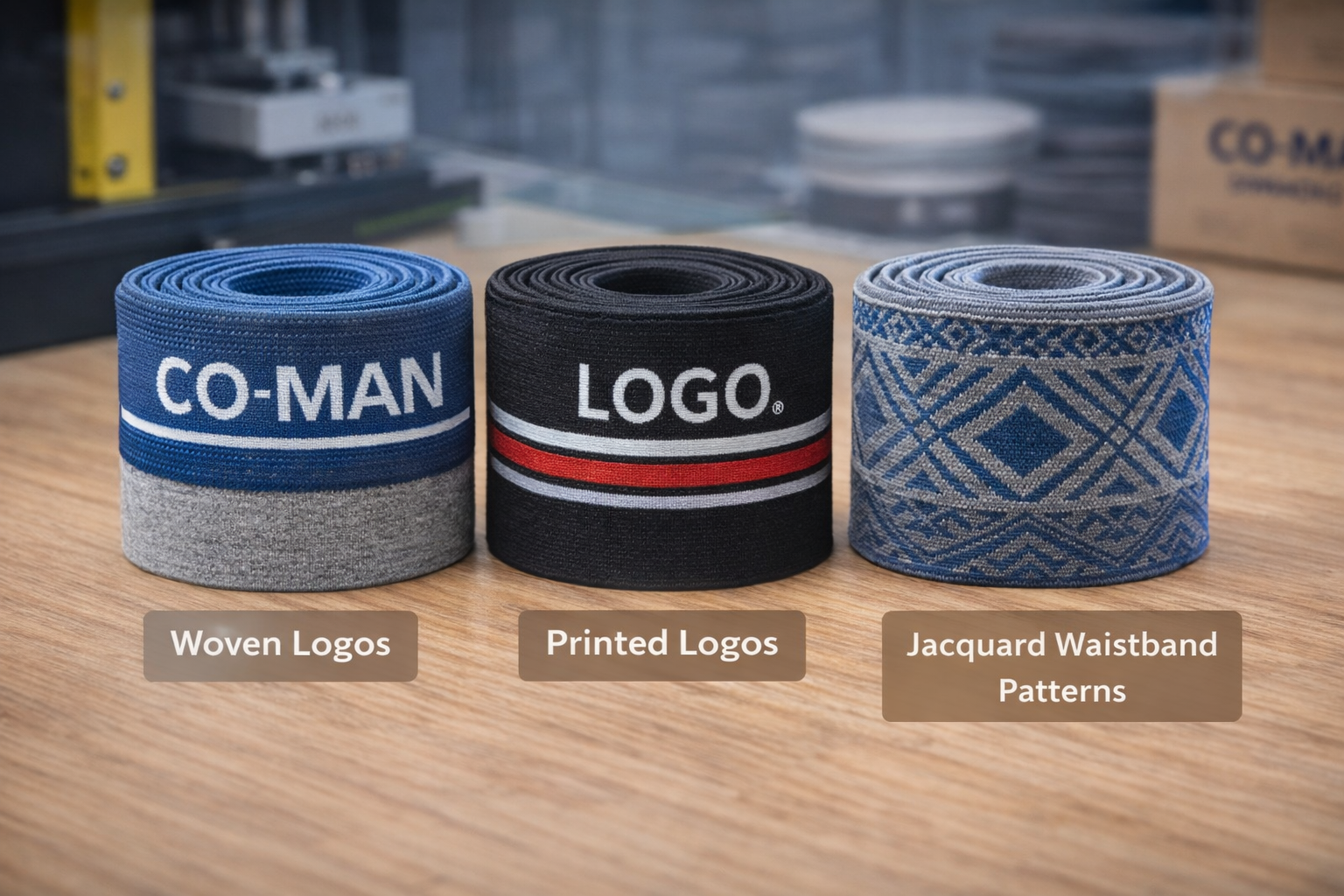
Woven logos: Durable and premium, but can be costly in small orders
Printed logos: Flexible for smaller MOQ, suitable for custom branding
Jacquard waistband patterns: A stylish way to display brand identity and stand out in the market
Brands should ensure that the elastic bands used are strong enough to hold logos and prints without fading or stretching, which could diminish the brand’s quality perception.
For B2B brands, waistband branding is not just decoration—it is a core brand asset.
CO-MAN helps buyers integrate logos, prints, and jacquard patterns into waistbands with production-ready precision.
With extensive OEM experience in men’s underwear, CO-MAN ensures elastic strength, print durability, and color fastness are fully tested, so logos remain clear and stable after repeated washing and long-term wear.
Whether you choose woven logos for premium positioning, printed logos for flexible MOQ programs, or jacquard patterns for strong visual identity, CO-MAN’s manufacturing control ensures branding consistency at scale—protecting both product quality and brand reputation in bulk orders,for long-term OEM partnerships.
Branding Method | MOQ Impact | Visual Effect | Durability |
Woven Logo | Higher MOQ | Premium | Very high |
Printed Logo | Lower MOQ | Flexible | Medium |
Jacquard Pattern | Medium MOQ | Strong branding | High |
Branding Methods
Comparison of Webbing and Patterns
Step 4—Quality Control for Elastic Consistency in Bulk Production
Elastic Band Consistency in Bulk Production is Critical
Waistband consistency in bulk production comes down to reliable elastic sourcing and quality control.
Key quality checkpoints for waistband elastic bands include:
Elastic stretch and recovery tests
Size and fit consistency across large orders
Logo clarity and placement during mass production
Elastic resistance to fabric and washing
Strict testing procedures ensure that your waistband is not only functional but also holds up to long-term wear and tear. CO-MAN’s sample-to-bulk control ensures that the waistbands remain consistent, delivering the same level of comfort and support as the approved sample.
CO-MAN ensures elastic consistency through strict quality control in bulk production.
For B2B buyers, waistband performance depends on stable elastic sourcing and disciplined testing standards.
CO-MAN implements elastic stretch and recovery tests, size and fit consistency checks, and logo clarity verification throughout mass production to ensure every waistband matches the approved sample.
CO-MAN’s elastic testing follows internal QC standards aligned with long-term wear and wash performance requirements.
By conducting over 1000 wash tests on the belt material, CO-MAN ensures the belt’s elasticity and comfort even after prolonged use.
CO-MAN employs the international ISO 9001 quality management standard during its production process to ensure that each batch of products meets the requirements for elastic recovery rate and dimensional stability,For more details, please click: https://comanunderwear.com/mens-underwear-fabric-certification-explained-a-b2b-guide/
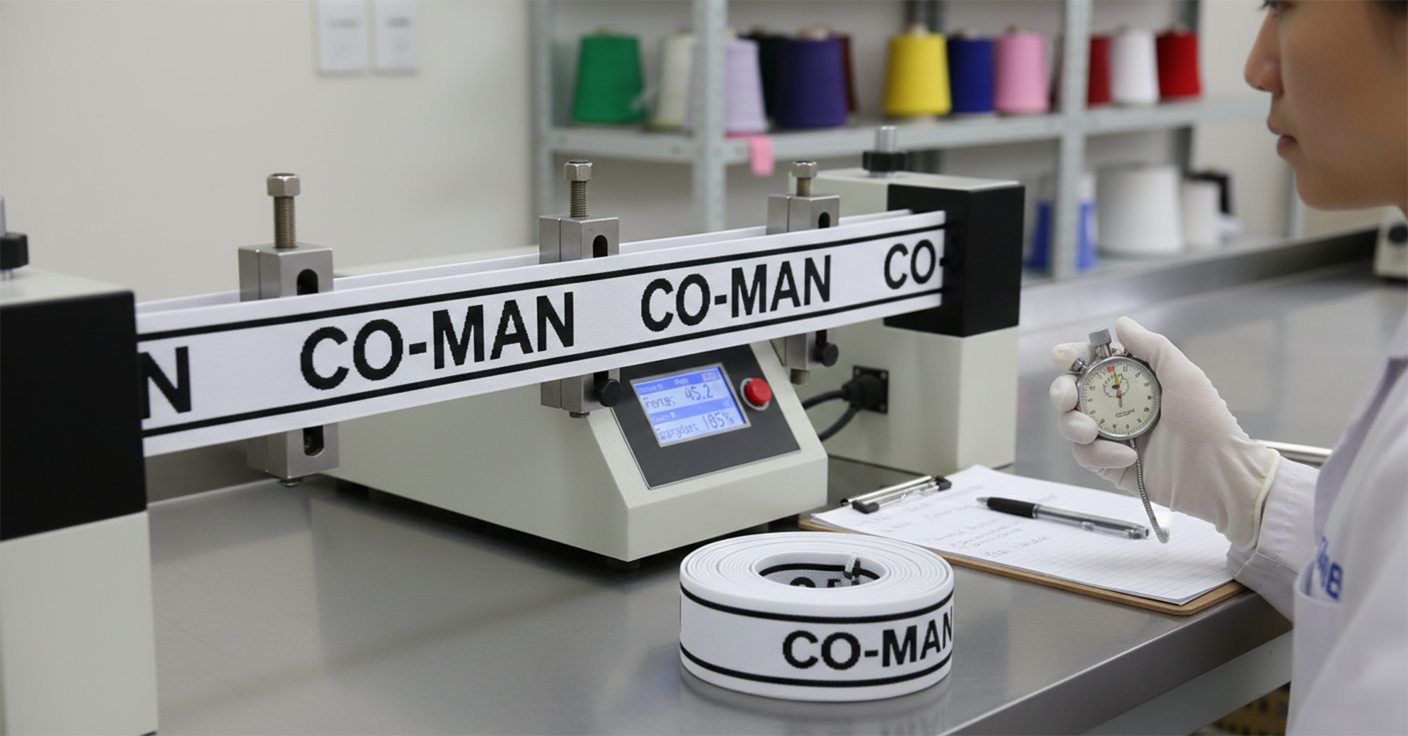
CO-MAN’s Waistband elasticity test
Conclusion—Waistband Quality Drives Comfort, Durability, and Customer Satisfaction
In men’s underwear OEM production, the waistband is crucial—it directly affects product fit, comfort, durability, and overall customer satisfaction. By following these four key steps, B2B buyers can:
Align waistband elastic choices with intended product functionality
Choose high-quality elastic bands for long-term wear and comfort
Integrate effective branding options without compromising fit and performance
Ensure consistent production with quality control systems in place
The right waistband can elevate a product, ensuring repeat business and fostering brand loyalty. Prioritize the waistband as a critical decision in your men’s underwear production process to achieve optimal comfort, durability, and consumer satisfaction.