
CO-MAN Underwear Team
A senior marketing expert from CO-MAN with 18 years of experience in custom underwear.
Why Sizing Accuracy Matters for Global Underwear Brands
This guide is designed to help importers, wholesalers, and private label brands accurately interpret sizing differences, minimize risks, and improve product-market fit when sourcing men’s underwear internationally.
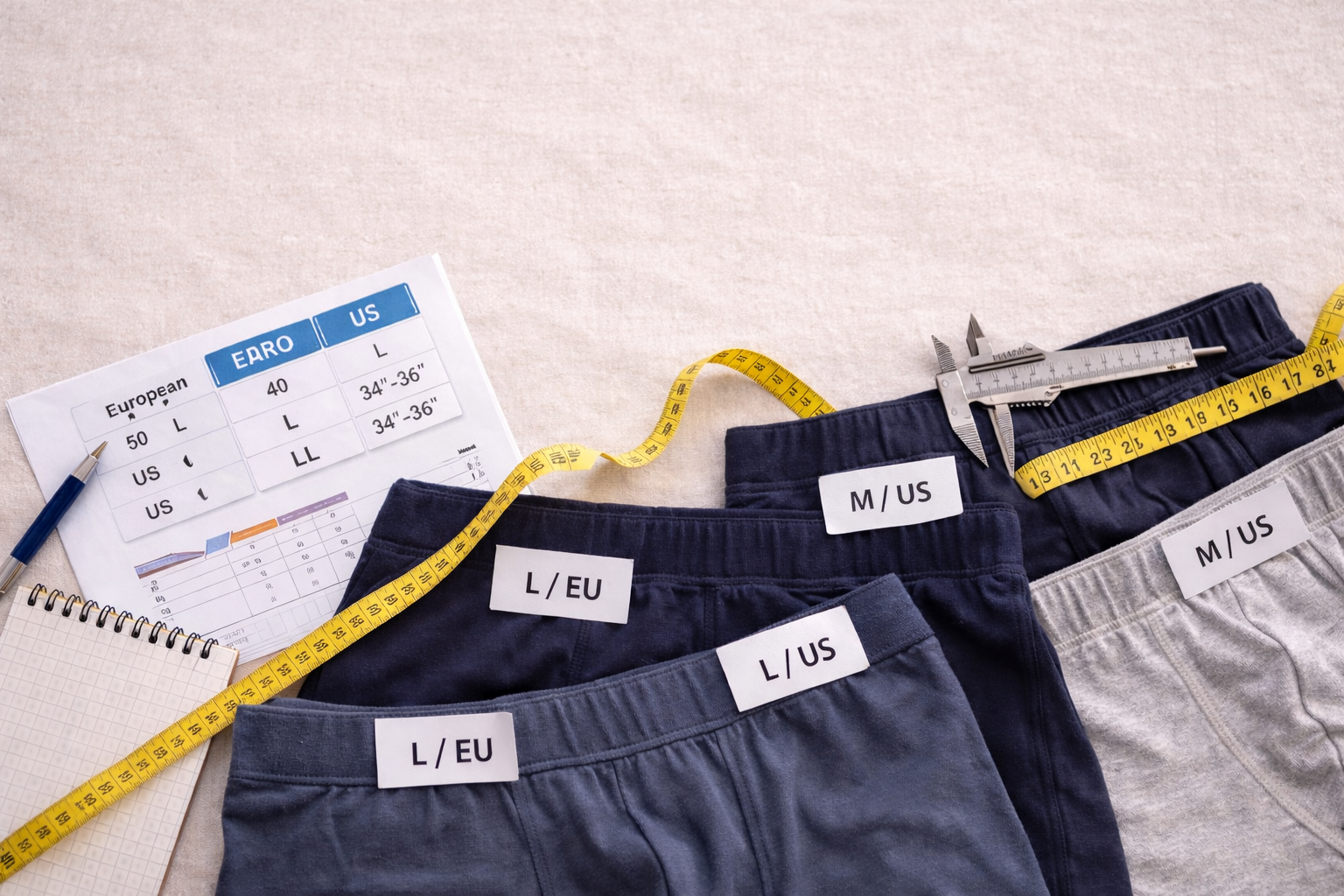
Table of contents
Understanding International Size Systems
In men’s underwear, European and U.S. markets use different sizing standards. European labels often use metric-based numbers (for example, a size EU 50 roughly equals a US 40) .
In contrast, U.S. brands typically size by inches (waist or chest measurement) or use S/M/L/XL letters .
These lettered sizes are not internationally standardized: for instance, suppliers note that “a U.S. ‘L’ is often larger than a European ‘L’”
Regional body differences also matter — on average American men have larger builds than European men — so a given size can fit very differently across markets.
All these factors (cm vs. inches, number vs. letter, body-shape differences) make simple size conversion risky for B2B buyers.
Comparison Aspect | European Sizing (EU) | U.S. Sizing (US) | Key Differences & Insights |
Numerical Sizing | EU 50 (Example) | US 40 (Example) | EU is metric-based (cm); US is imperial-based (inches). |
Letter Sizing (L) | L (Smaller fit) | L (Larger fit) | A U.S. "L" is typically larger than a European "L". |
Measurement Unit | Metric (Centimeters) | Imperial (Inches) | Different units lead to conversion risks for buyers. |
Body Build Basis | Average smaller build | Average larger/heavier build | U.S. brands design for a larger average body shape. |
Standardization | Not internationally standardized | Not internationally standardized | S/M/L/XL labels vary significantly by region and brand. |
Size Comparison Table for European vs. U.S. Men’s Underwear
Common Fit Issues in Cross-Regional Sales
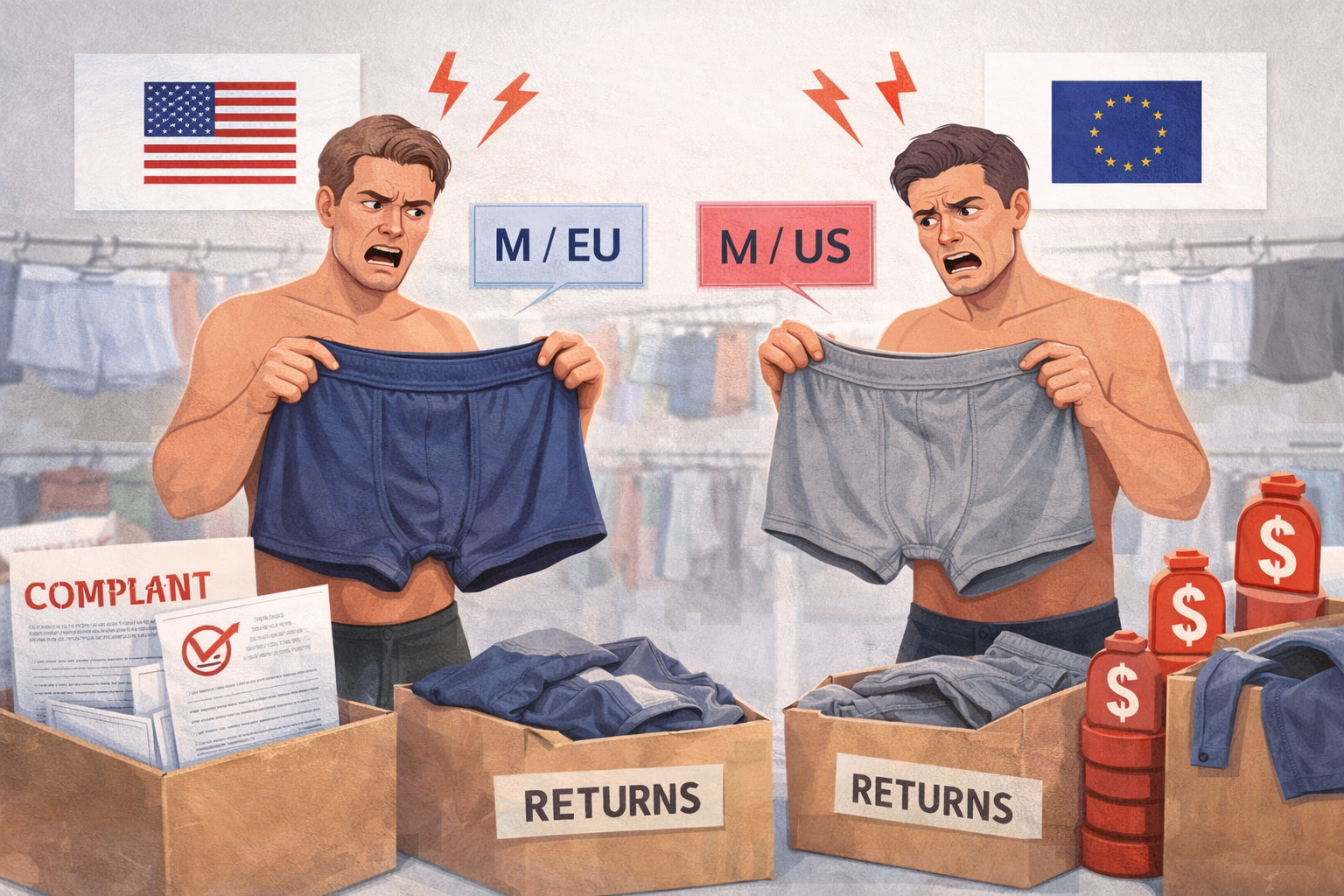
B2B buyers often hear complaints about mis-sized products when selling across regions. Retailers may report that items run too small or too large, or that the cut feels wrong in areas like the waist or leg length.
For example, a boxer brief intended for the US market might feel too tight on a European customer with a smaller waist, and vice versa.
Even a few centimeters of difference in key measurements can trigger returns or complaints
industry data confirm that sizing problems dominate returns: roughly 70% of apparel returns are due to poor fit or size issues.
Likewise, grading errors (when the pattern isn’t scaled properly) can cause one size to fit fine while another in the same style is too baggy or tight.
Such fit mismatches not only frustrate end consumers but also burden your wholesale partners with exchanges and service issues.
Incorrect size
At CO-MAN, we specialize in precision sizing for European and American men’s underwear markets. Our in-house design and production teams develop region-specific patterns that address cross-market fit issues—minimizing returns and maximizing customer satisfaction.
Partner with us to eliminate costly misfits and deliver comfort that fits.
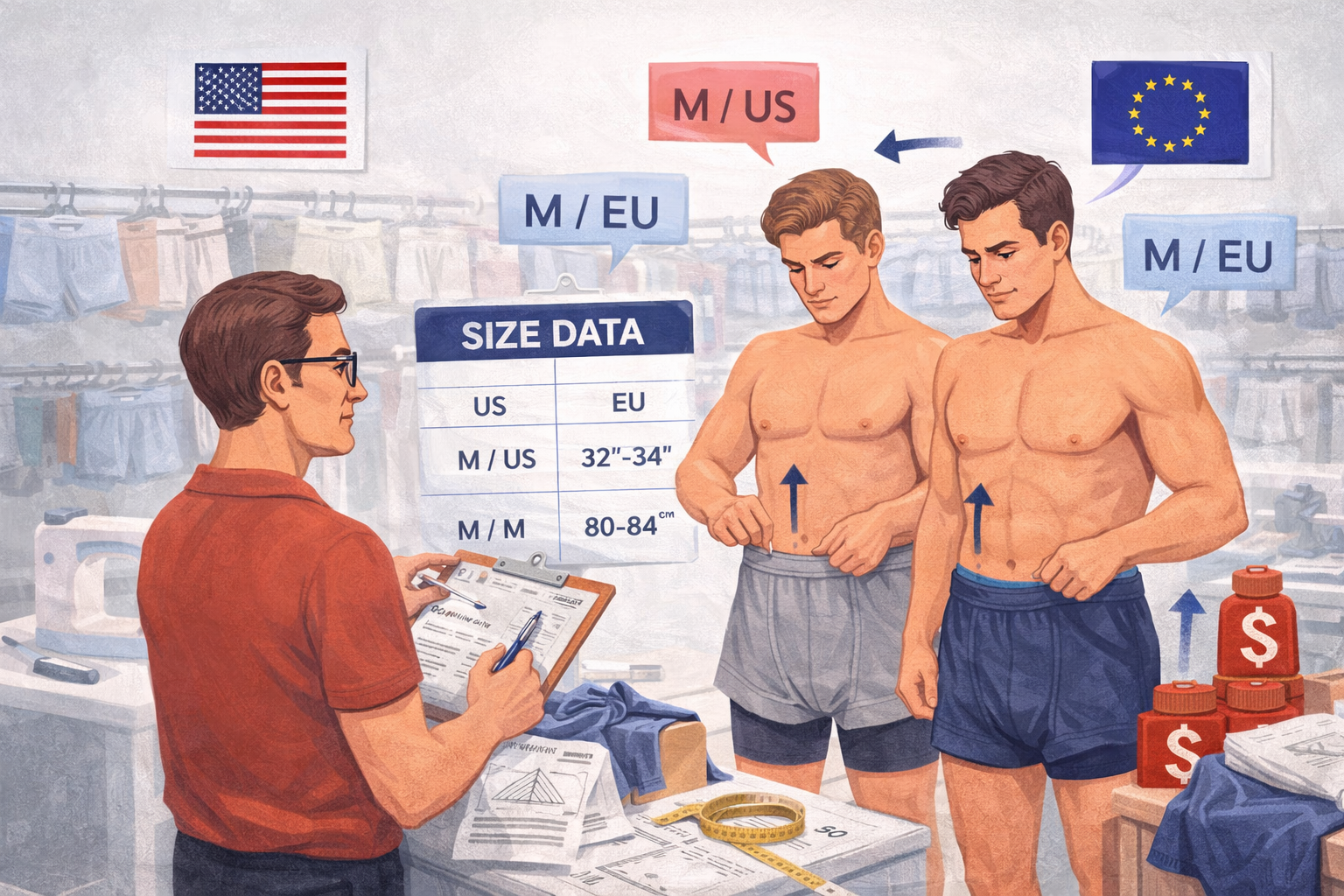
How to Select the Right Size Chart and Fit Model
To minimize fit issues, adapt your sizing to each market. Start by consulting anthropometric or industry size data (for example, Alvanon or ASTM body measurement surveys) to understand average body dimensions in the US versus Europe.
Develop a master pattern in a base size (often the mid-range, like “M”) and then grade up and down.
A good practice is to make pre-production (PP) samples in the base size plus at least one smaller and one larger size (e.g. S, M, L) to verify grading accuracy.
Conduct fit sessions with models from the target region: check that waistbands, pouch fit, and leg lengths feel natural, and that ease (roominess) scales smoothly between sizes.
Adjust grade rules if needed — for instance, U.S. bodies may require slightly more ease or length than European ones.
By building your size chart on local body data and refining with real fit models, suppliers can ensure each garment meets the expectations of European or American customers.
Sizing strategy
Reducing Returns Through Accurate Sizing
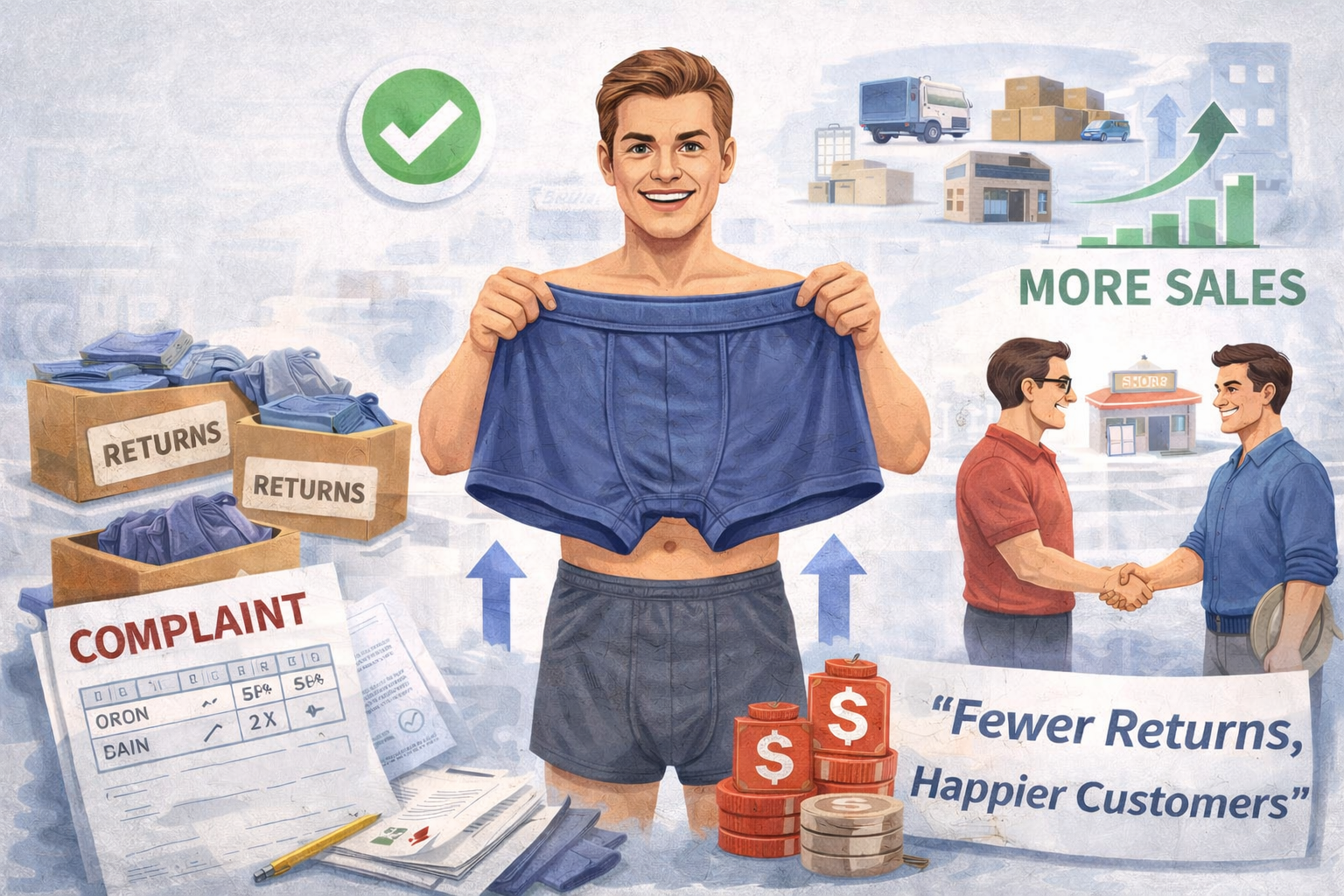
Accurate sizing delivers tangible business value. When garments fit as expected, return and exchange rates drop sharply.
As noted above, most apparel returns stem from fit or sizing issues (industry studies cite roughly 40–70% of returns caused by fit mismatches).
Lower return rates mean less wasteful logistics, fewer costly exchanges, and higher net sales.
Moreover, brands that get sizing right tend to earn better loyalty and fewer complaints from their retailers.
in the words of one expert, “smart grading can save thousands in returns, elevate customer experience, and streamline your supply chain”.
In practical terms for men’s underwear B2B, investing effort into the right size charts and fit models pays off: you spend less on handling returns and more on growing partnerships, while your brand gains a reputation for reliability.
Improve customer satisfaction
Conclusion—4 Key Takeaways for Sizing Men’s Underwear Across Markets
1.Understand the Systems – US and EU sizing differ in labels, units, and body measurements. Avoid assuming direct conversions.
2.Anticipate Fit Complaints – Cross-regional sales often face sizing mismatch issues that lead to returns. Even small measurement differences matter.
3.Adapt Your Size Chart – Use regional body data, create smart grading rules, and test fit models to localize sizing effectively.
4.Sizing = Profit – Accurate sizing reduces returns, improves buyer satisfaction, and enhances your brand’s professional image in wholesale channels.
By mastering these four steps, B2B buyers and private label brands can reduce costly errors and deliver products that truly fit their target markets.