
CO-MAN Underwear Team
A senior marketing expert from CO-MAN with 18 years of experience in custom underwear.
Men’s Underwear OEM Production Process: From Design to Bulk Delivery
For e-commerce brands, wholesalers, and private-label buyers, understanding the men’s underwear OEM production process is essential to controlling cost, quality, and delivery risk.
This guide explains the complete men’s underwear OEM workflow, helping B2B buyers make informed sourcing decisions and work more effectively with manufacturing partners.
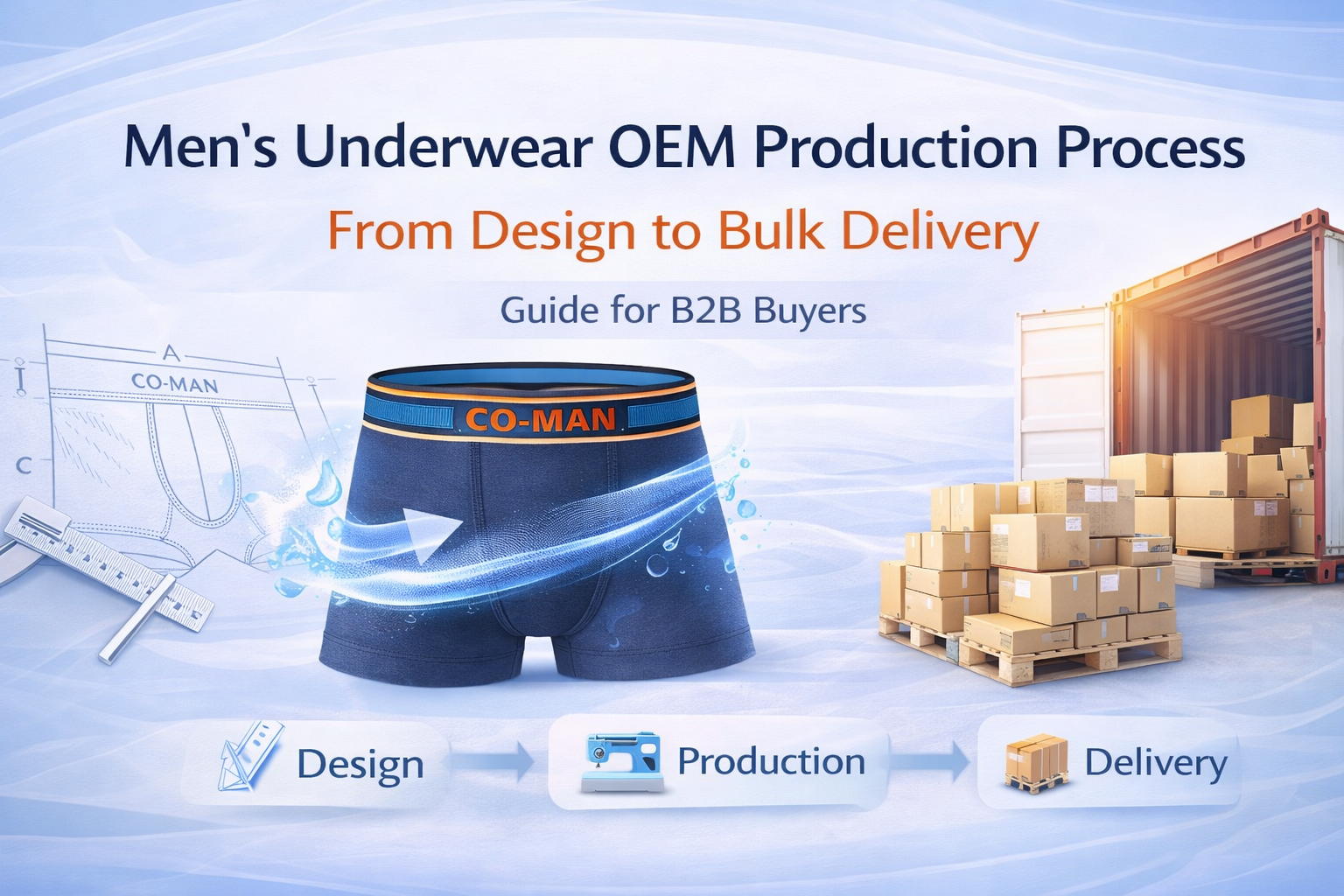
Table of contents
Module 1—Design Concept and Technical Specification Development
Turning Market Demand into Production-Ready Designs
The OEM process begins with transforming market insights into clear, manufacturable designs.
At this stage, brands typically define:
Target market and usage scenarios
Underwear style (boxer briefs, trunks, briefs, performance styles)
Fit requirements, pouch construction, and waistband preferences
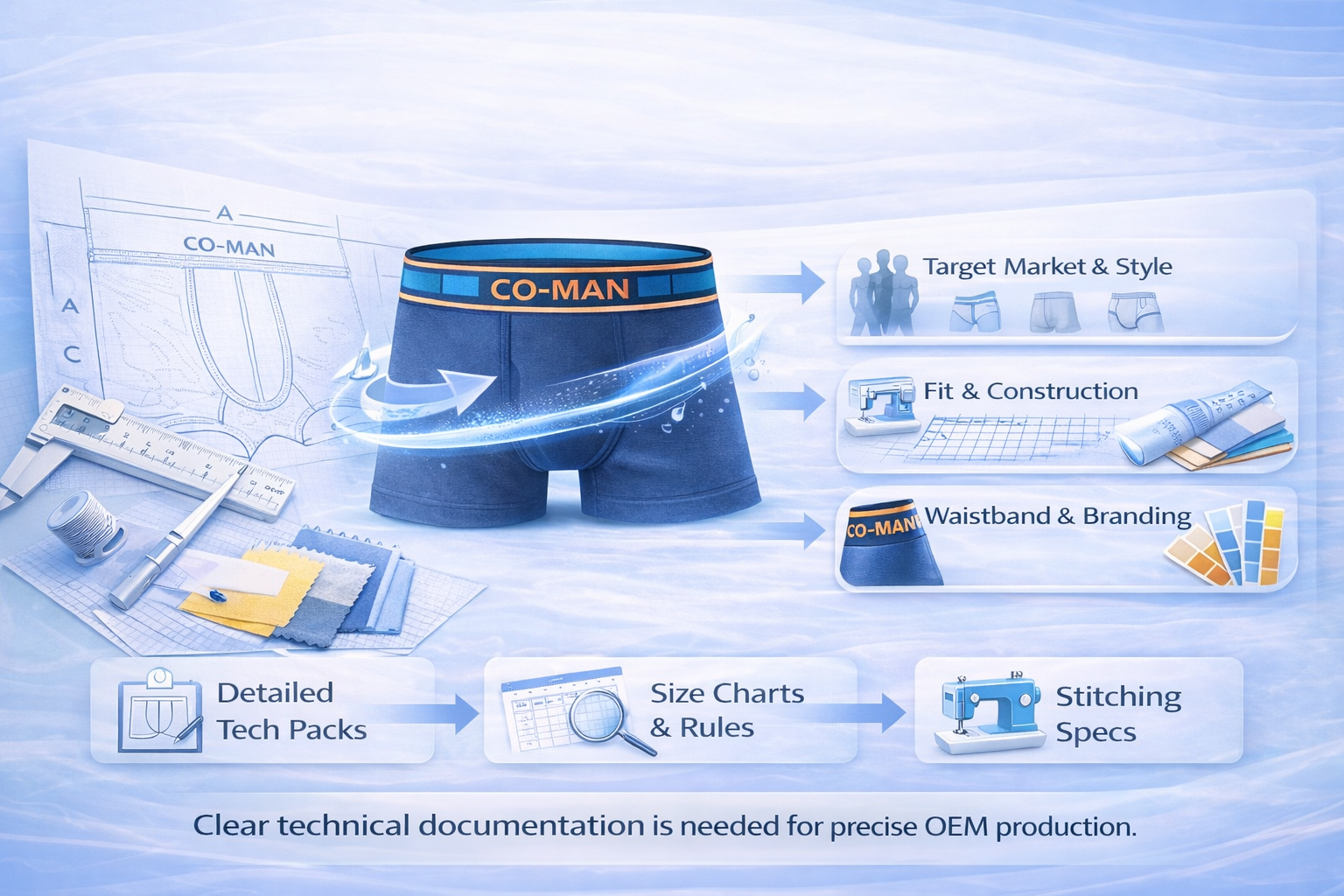
For OEM production, technical clarity is critical. Design sketches must be translated into:
Detailed tech packs
Size charts and grading rules
Construction and stitching specifications
Clear technical documentation reduces miscommunication and prevents costly revisions later in the process.
CO-MAN excels in accurately translating approved samples into consistent bulk production.
With deep expertise in men’s underwear OEM manufacturing, CO-MAN places strong emphasis on sample-to-production accuracy, ensuring that every approved detail—from fit and pouch construction to waistband specifications and stitching methods—is faithfully reproduced in mass production.
By maintaining strict control over technical specifications, patterns, and grading rules, CO-MAN helps B2B buyers minimize deviations, reduce costly revisions, and achieve stable quality from sampling through final delivery.
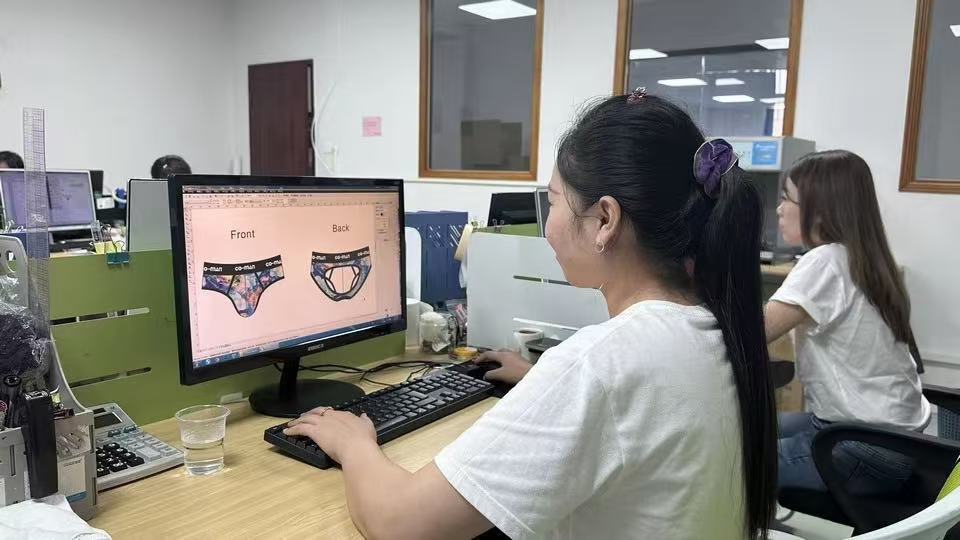
With over 18 years of underwear OEM design experience, CO-MAN’s technical teams ensure sample details translate precisely into bulk production.
CO-MAN’s Design Process
Module 2—Fabric and Material Sourcing
Selecting Materials That Support Bulk Production
Fabric selection is not only a design decision—it is a supply-chain decision.
OEM manufacturers evaluate fabrics based on:
Comfort, stretch, and durability
Batch consistency and color stability
Suitability for long-term repeat orders
Common materials in men’s underwear OEM production include:
Cotton and cotton blends
Modal, MicroModal, and bamboo fabrics
Performance fabrics such as polyester or nylon blends
Reliable material sourcing ensures that approved samples can be replicated consistently in mass production.
CO-MAN ensures stable fabric quality through long-term, source-level material partnerships.
As a source men’s underwear factory, CO-MAN has built over 10 years of cooperation with multiple fabric mills, enabling consistent access to cotton blends, modal, bamboo, and performance fabrics with reliable batch stability.
These long-standing partnerships allow CO-MAN to control material quality at the source, ensure color and performance consistency, and support repeat bulk orders with confidence—helping B2B buyers reduce sourcing risk and maintain long-term product reliability.

CO-MAN’s Purchasing Personnel
Module 3—Sampling and Fit Validation
From Prototype to Approved Sample
Sampling is the most critical checkpoint in the OEM workflow.
During this phase, brands and manufacturers confirm:
Fit accuracy and comfort during movement
Pouch structure and support
Waistband elasticity and recovery
Stitching quality and finishing details
Multiple sample revisions may be required to align design intent with production reality.
An approved sample becomes the benchmark for bulk production, making this stage essential for risk control.
CO-MAN applies a rigorous, detail-driven approach to sampling and fit validation.
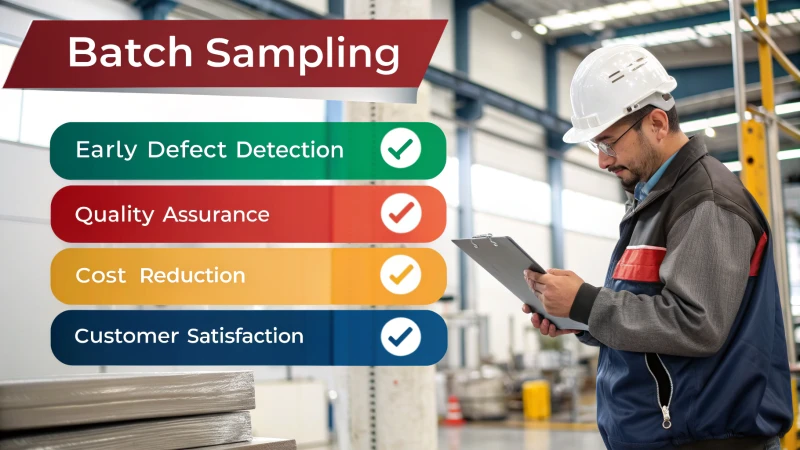
During the sampling stage, CO-MAN conducts multiple rounds of sample confirmation, focusing on key technical checkpoints including fit tolerance, pouch structure accuracy, waistband elasticity recovery, fabric shrinkage after washing, and stitching durability at stress points.
Backed by a design team with over 10 years of professional experience in men’s underwear development, CO-MAN ensures that each approved sample is both wear-tested and production-ready.
This disciplined process allows brands to identify potential issues early, reduce costly revisions, and establish a reliable benchmark for consistent bulk production.
CO-MAN’s Sampling Inspection
Module 4—Pre-Production Planning and Process Setup
Preparing for Scalable Manufacturing
Before bulk production begins, OEM factories conduct pre-production planning to ensure efficiency and consistency.
This includes:
Pattern finalization and cutting layout optimization
Production line allocation
Labor and machine scheduling
Quality control checkpoints definition
Proper pre-production planning helps:
Reduce material waste
Shorten production lead times
Maintain stable quality across large orders
This step is especially important for brands planning repeat or replenishment orders.
CO-MAN strengthens bulk production reliability through structured pre-production planning.
Before mass production begins, CO-MAN conducts detailed pre-production process setup, including pattern layout optimization, production line allocation, machine scheduling, and clearly defined quality control checkpoints.
This systematic planning approach allows CO-MAN to minimize material waste, shorten lead times, and maintain consistent quality across large or repeat orders.
For brands managing replenishment programs or scalable SKUs, CO-MAN’s disciplined pre-production planning ensures smoother execution, predictable delivery schedules, and reduced operational risk throughout bulk manufacturing.
CO-MAN’s Risk Management Plan
Module 5—Bulk Production and In-Process Quality Control
Ensuring Consistency at Scale
During bulk production, quality control is integrated at every stage.
Key inspection points include:
Raw material inspection
Cutting and sewing accuracy
Waistband and pouch assembly consistency
Visual and functional checks
In-process quality control allows issues to be identified early, preventing defects from affecting the entire order.
For B2B buyers, this stage determines whether bulk products truly match the approved sample.
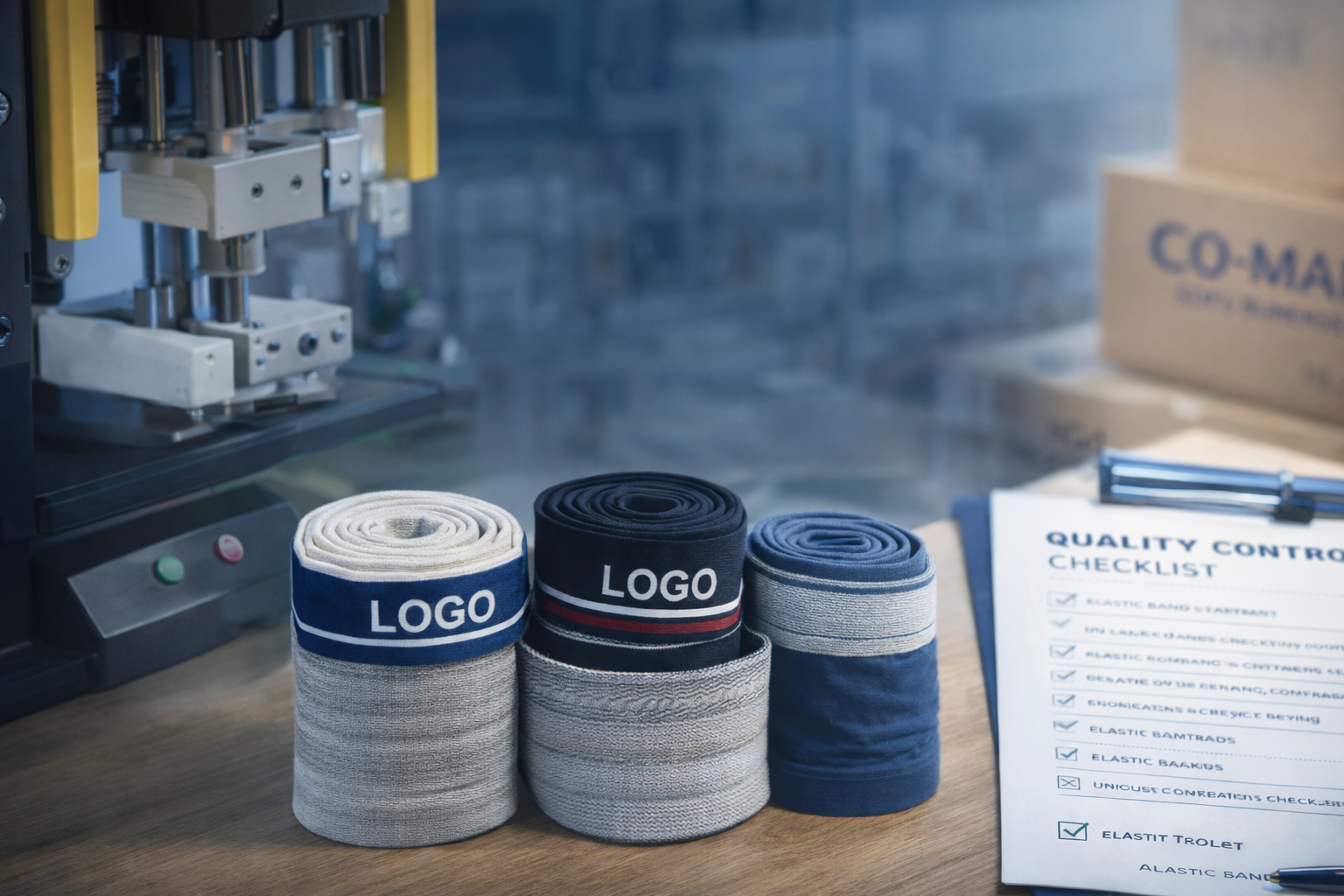
CO-MAN integrates quality control into every stage of bulk production.
During mass manufacturing, CO-MAN implements in-process quality control (IPQC) to monitor raw material consistency, cutting and sewing accuracy, and the assembly stability of waistbands and pouch structures. Visual and functional inspections are carried out throughout production to ensure each batch aligns with the approved sample.
By identifying potential issues early in the production flow, CO-MAN helps B2B buyers prevent large-scale defects, reduce rework risk, and maintain consistent quality across the entire order, making bulk production more predictable and reliable.
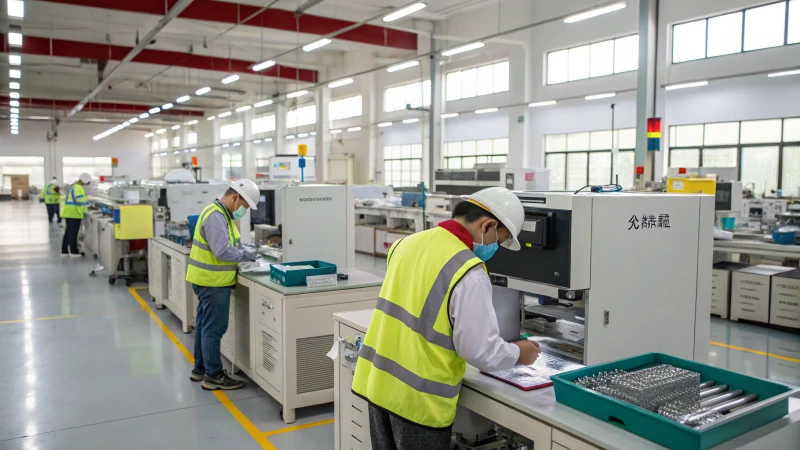
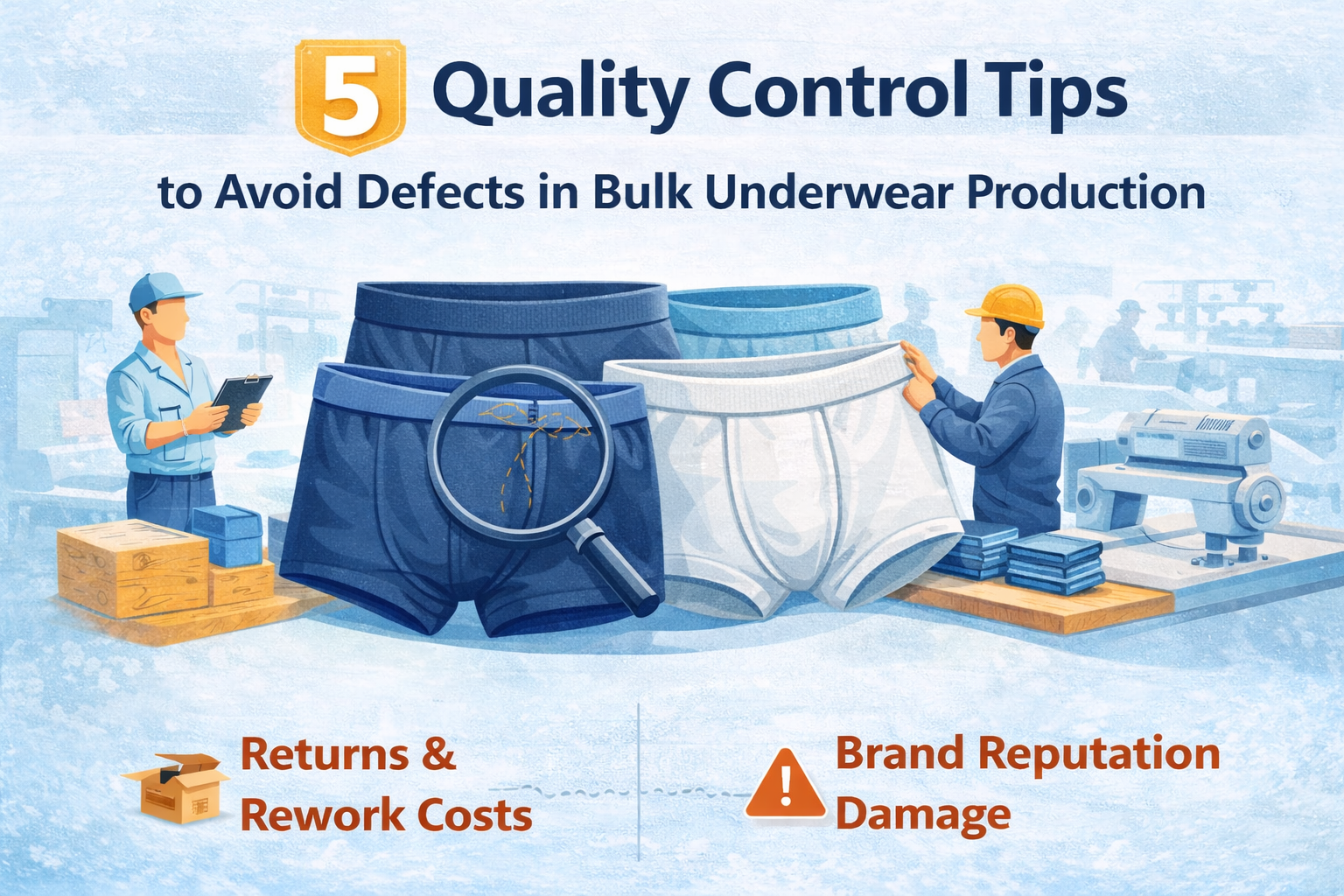
CO-MAN’s Quality Control
Module 6—Final Inspection, Packing, and Shipment
From Factory Floor to Buyer Warehouse
Once production is complete, final inspection verifies:
Size tolerance compliance
Appearance and finishing quality
Packaging accuracy based on buyer requirements
After approval, products are packed according to:
Brand packaging specifications
Retail or e-commerce fulfillment needs
Export and logistics standards
Efficient coordination between production, packing, and logistics ensures on-time delivery and reduced supply-chain risk.
CO-MAN ensures reliable delivery through strict final inspection and shipment control.
Before shipment, CO-MAN conducts final quality inspections covering size tolerance, appearance, finishing details, and packaging accuracy to ensure every order fully meets approved specifications. Products are then packed according to brand packaging requirements, e-commerce fulfillment standards, and international export regulations.
By coordinating production completion, packing execution, and logistics scheduling, CO-MAN helps B2B buyers achieve on-time delivery, reduced supply-chain risk, and smoother warehouse receiving, even for large-scale or repeat orders.
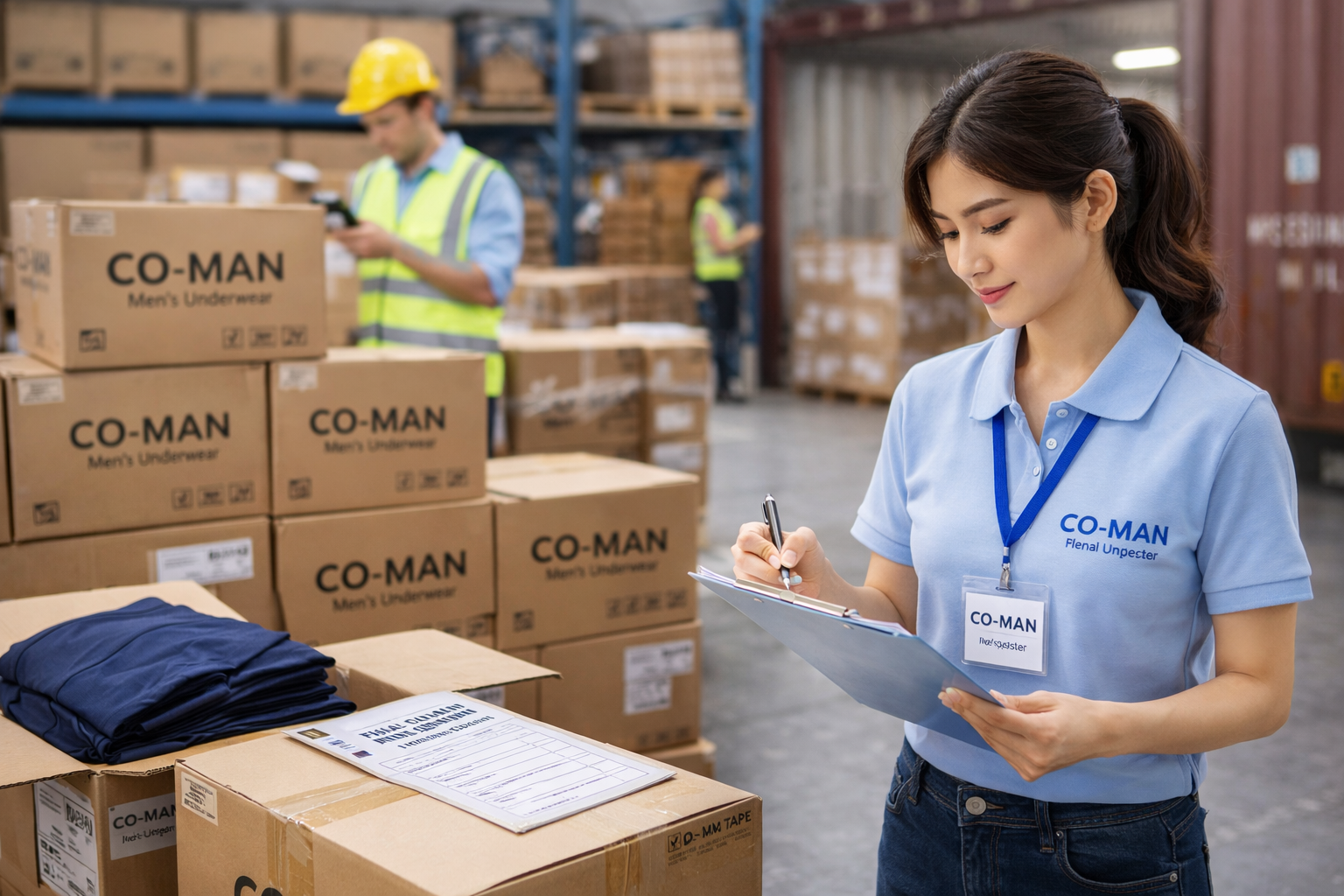
CO-MAN’s Packaging Inspection
Conclusion—Why Understanding the OEM Process Matters for B2B Buyers
The men’s underwear OEM production process is more than a manufacturing sequence—it is a risk management system.
Brands that understand each stage can:
Communicate more effectively with suppliers
Reduce development and production errors
Control cost, quality, and delivery timelines
By aligning design intent with production capability, B2B buyers can build reliable, scalable underwear programs that support long-term growth.
Risk | OEM Impact | CO-MAN Strategy |
Sample mismatch | Bulk deviation | Iterative sampling confirmation |
Material inconsistency | Quality variation | Long-term fabric partnerships |
Lead time delays | Delivery risk | Pre-production planning |
Packaging errors | Fulfillment issues | Final inspection QC |
Common Production Risks and CO-MAN’s Solutions