

CO-MAN Underwear Manufacturing Team
CO-MAN Underwear Manufacturing Team boasts over 19 years of expertise in professional men's underwear production, offering one-stop OEM & ODM solutions for global brands worldwide.
Custom Cooling Pouch Underwear: What Brands Should Specify Before Manufacturing
Developing custom cooling pouch underwear requires more than adding a pocket to an existing underwear style. For private label brands and wholesale buyers, pouch placement, insert compatibility, fabric performance, and fit all need to be confirmed before production.
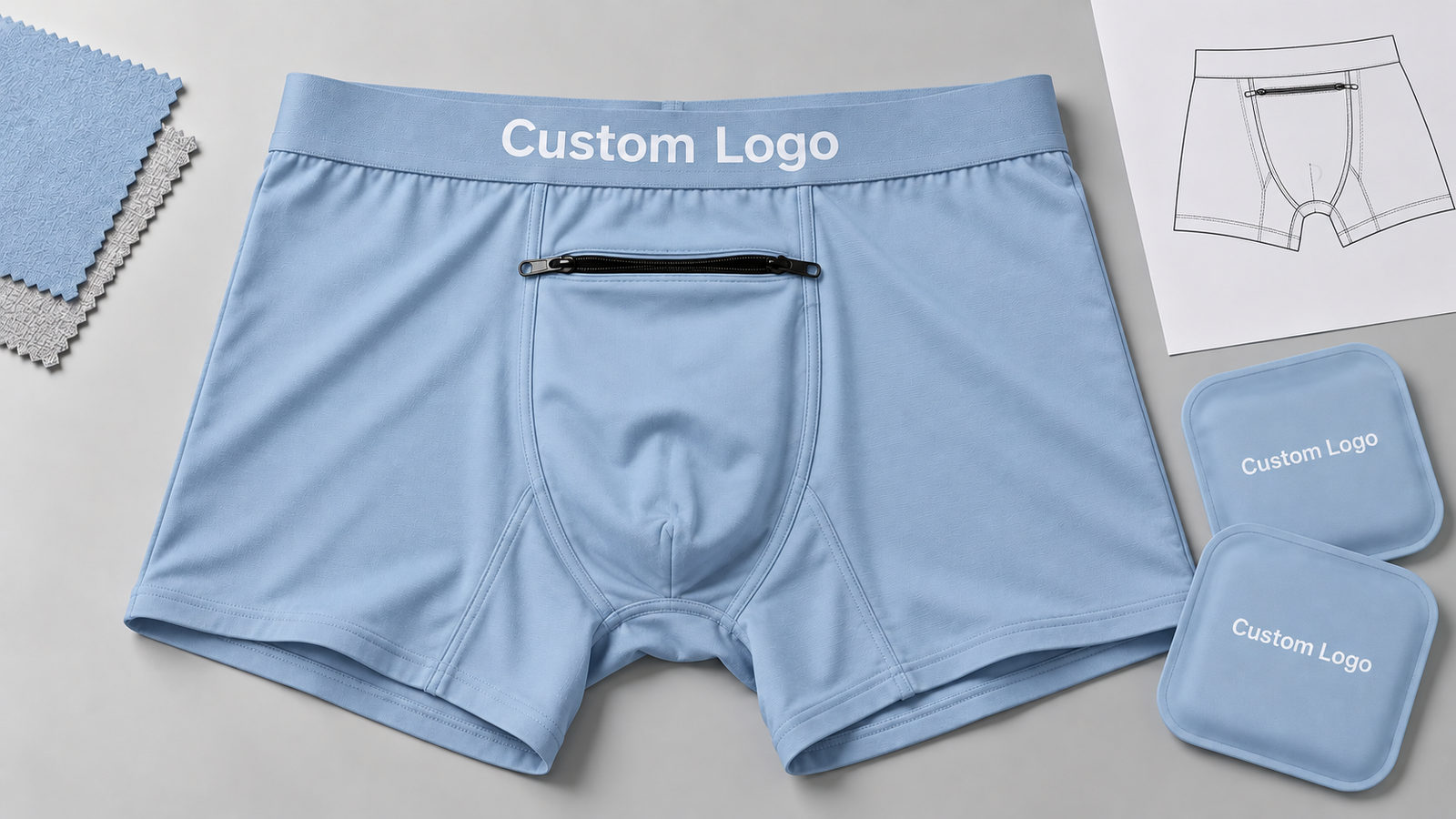
Table of contents
Module 1 — Define the Target Customer and Intended Use
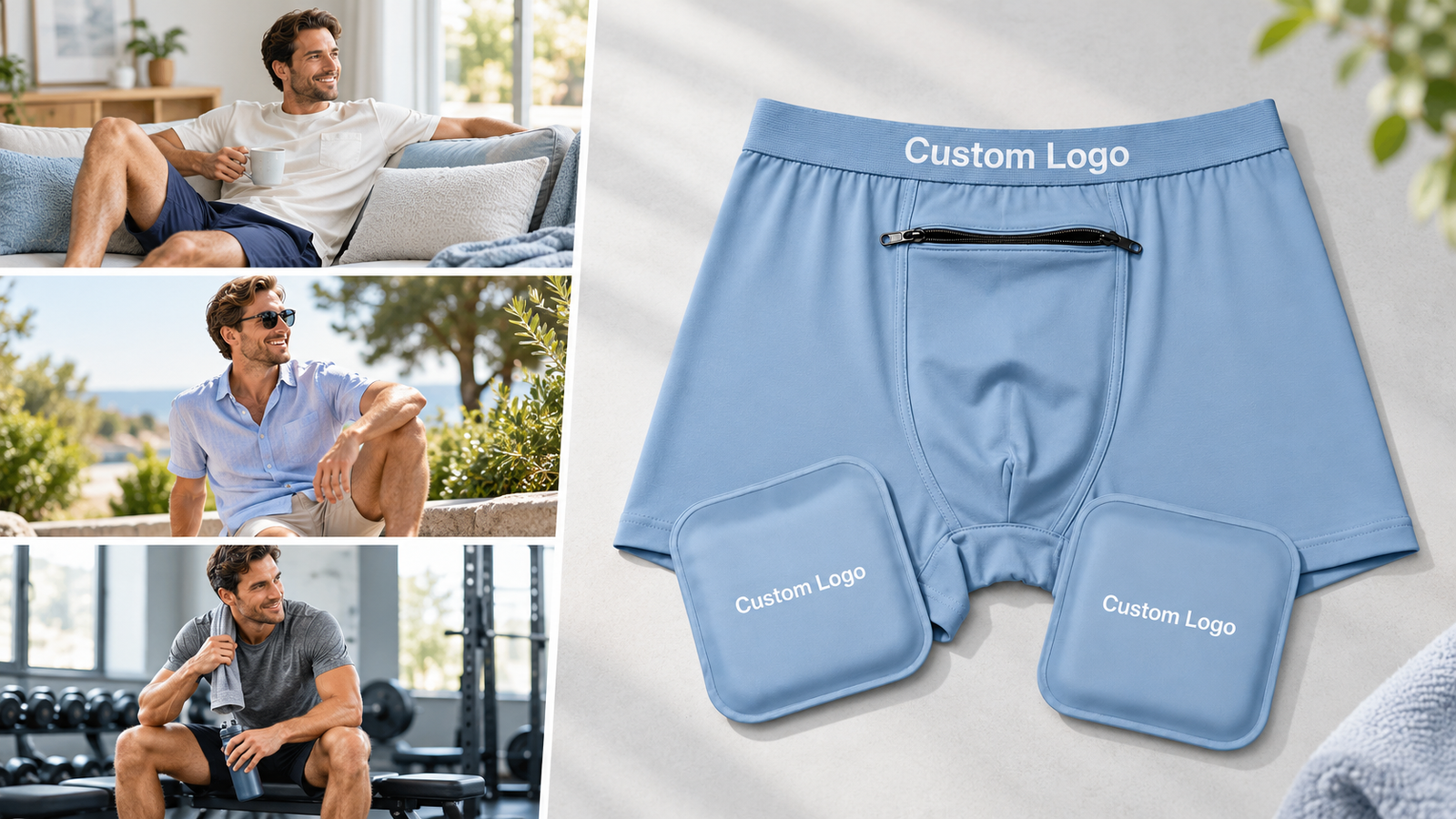
Before discussing materials or construction, brands should define who the product is designed for and how it will be used. Everyday cooling, warm-weather comfort, and post-activity use may require different product specifications.
Key requirements to confirm:
- Target market, customer profile, and size range.
- Intended wearing conditions and duration.
- Underwear style: briefs, trunks, or boxer briefs.
- Product positioning and target retail price.
- Whether the cooling insert is included or purchased separately.
Clear positioning helps the manufacturer recommend a suitable structure instead of simply modifying a standard underwear pattern.
Module 2 — Specify Pouch Placement and Construction
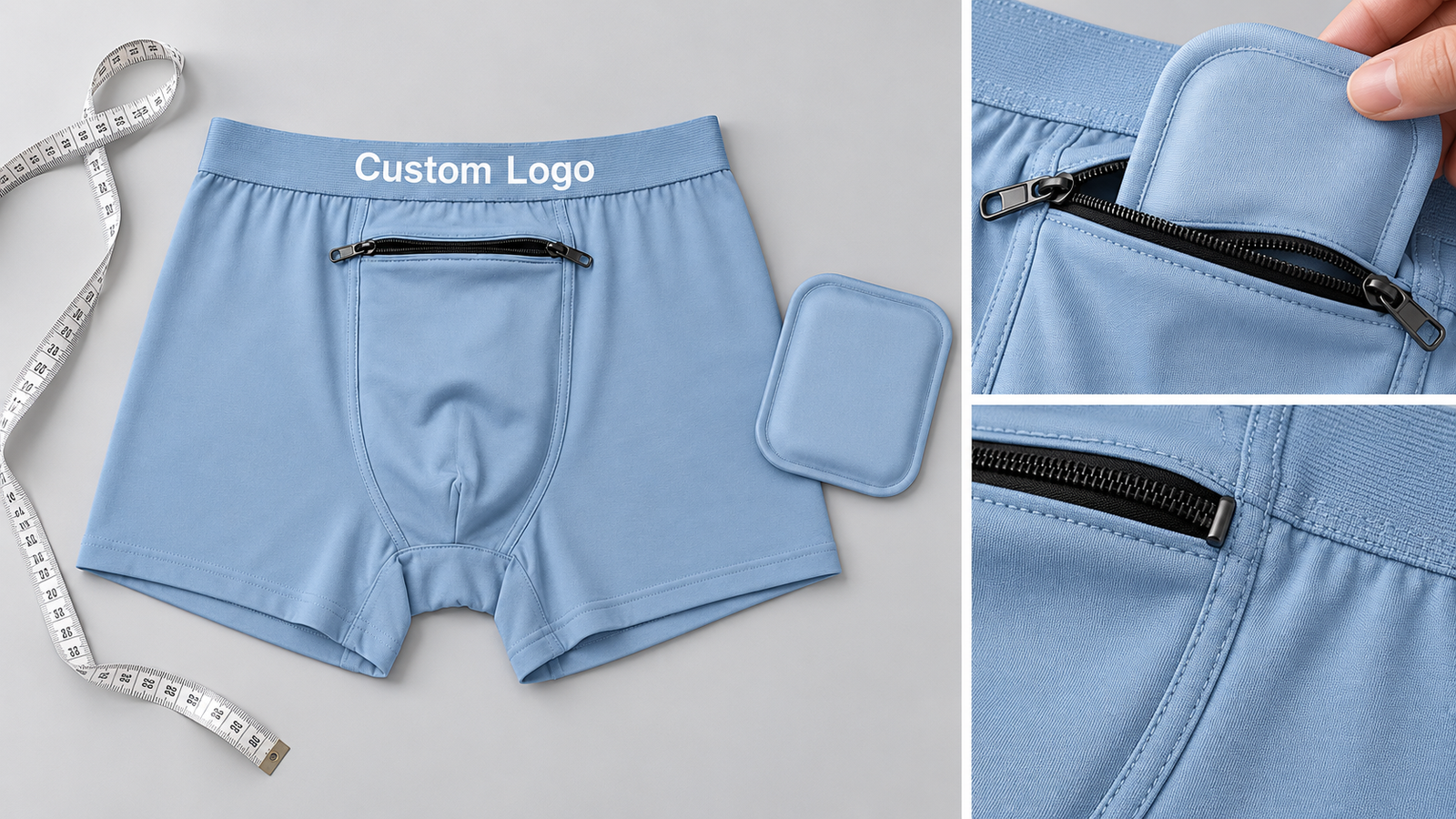
The pouch should hold the cooling insert securely while allowing convenient insertion and removal. Its construction must also maintain comfortable support without creating excessive bulk or pressure.
Key requirements to confirm:
- Pouch location and coverage area.
- Internal dimensions and opening size.
- Opening direction and insert retention method.
- Barrier fabric between the insert and the skin.
- Seam placement, reinforcement, and drainage or drying considerations.
Brands should assess the pouch both with and without an insert. The underwear should retain a balanced fit in both conditions.
CO-MAN Custom Cooling Pouch Underwear: Pouch Construction Developed for Your Brand
With 20 years of underwear manufacturing and customization experience, CO-MAN helps private label brands and wholesale buyers turn cooling pouch concepts into clear product specifications.
We work with your team to confirm pouch placement, internal dimensions, opening design, and insert retention based on your intended cooling pack. Development also considers the skin-facing barrier fabric, seam placement, and reinforcement to balance accessibility, support, and wearing comfort.
During sampling, the garment should be evaluated both with and without the cooling insert. Approved construction details and measurements then provide a consistent reference for bulk production and repeat orders.
Module 3 — Confirm Cooling Insert Compatibility
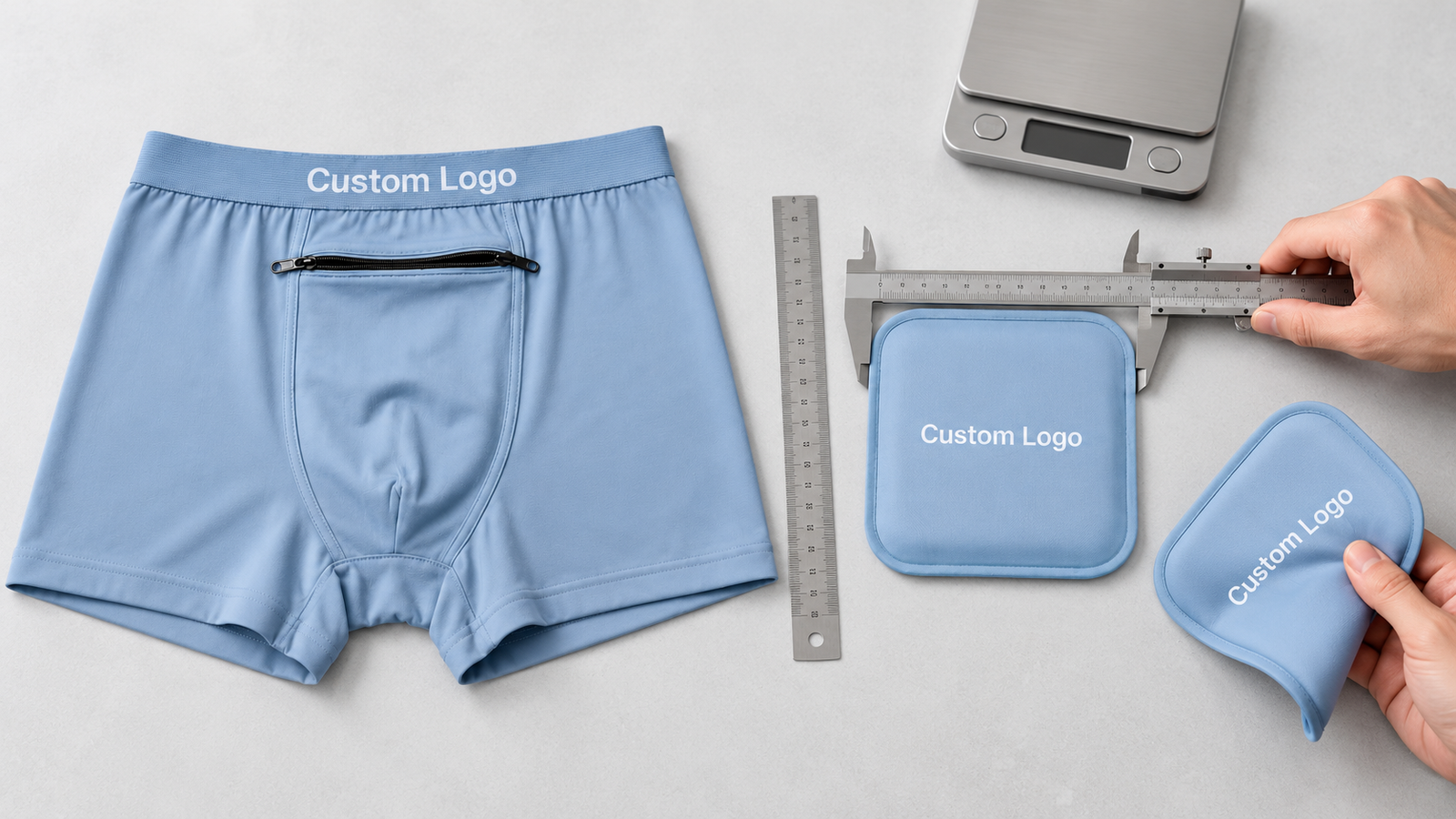
The underwear pouch and cooling insert should be developed as a compatible system. An insert that is too large, heavy, or rigid can affect fit, comfort, and pouch stability.
Key requirements to confirm:
- Insert length, width, thickness, and weight.
- Shape and flexibility in its intended cooled condition.
- Compatibility with the approved pouch dimensions.
- Ease of insertion, removal, and replacement.
- Responsibility for insert sourcing and quality verification.
Brands should provide the actual insert or a confirmed reference sample during development. Compatibility should be checked using the intended insert rather than an approximate substitute.
Specification | Example Target / Check | What Brands Should Confirm |
Insert Dimensions | 120 × 100 mm | Measure the actual insert in its intended cooled condition before developing the pouch. |
Internal Pouch Dimensions | 130 × 110 mm for the example insert | This provides approximately 5 mm clearance on each side. Confirm fit without excessive movement. |
Usable Opening Width | 110 mm for a 100 mm-wide insert | Check the clear opening between zipper stops and confirm easy insertion without forcing the pack. |
Insert Thickness | Example: 10 mm | Evaluate front-pouch bulk and pressure with the cooled insert inside. |
Insert Weight | Example: 150 g per insert | Check whether the loaded pouch pulls the garment downward or changes waistband fit. |
Insertion and Removal Check | 20 cycles during sample evaluation | Check for snagging, lining damage, and changes in zipper operation. |
Seated Fit Check | 3 representative wearers; 10 sit-to-stand repetitions each | Record insert shifting, pouch distortion, and any discomfort. Use this as an initial check before broader fitting. |
Garment Wash Check | 5 wash cycles following the proposed care instructions | Recheck pouch dimensions, zipper operation, and insert compatibility after washing. |
- These figures are illustrative development targets, not confirmed CO-MAN product specifications. Final dimensions, tolerances, and evaluation methods should be agreed using the actual cooling insert and approved garment samples.
Module 4 — Select Fabrics for Comfort and Moisture Management
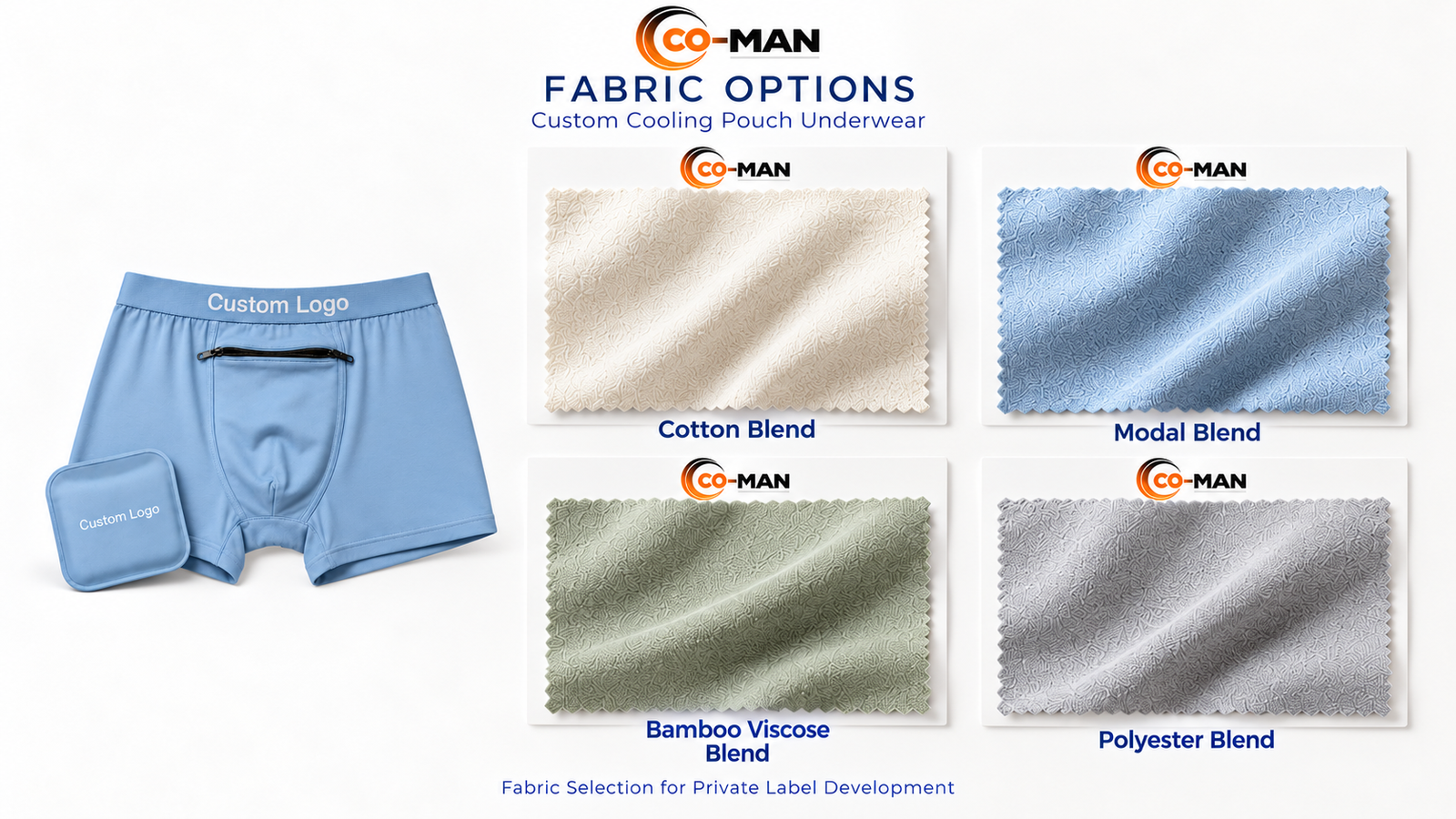
Fabric selection should consider the complete product, including the main body, pouch lining, and skin-facing barrier. Cooling inserts may introduce condensation, making moisture management and drying performance relevant to development.
Key requirements to confirm:
- Fabric composition, weight, and stretch.
- Softness and breathability.
- Moisture absorption and drying performance.
- Pouch lining and barrier material.
- Shrinkage, colorfastness, and performance after washing.
Material choices should be evaluated in finished samples. A fabric that performs well in ordinary underwear may behave differently when combined with a cooling insert.
CO-MAN Custom Cooling Pouch Underwear: Fabric Development for Your Brand
For private label brands and wholesale buyers, cooling pouch underwear requires coordinated fabric selection across the garment body, pouch lining, and skin-facing barrier. The added insert can affect stretch, comfort, and moisture handling, so materials should be evaluated together in a finished sample.
With 20 years of underwear manufacturing and customization experience,
CO-MAN supports fabric selection based on your cooling insert specifications, target market, and product positioning. We help your team define fabric composition, weight, stretch, and lining requirements, with attention to softness, breathability, and moisture management.
During development, washing evaluations can help assess shrinkage, colorfastness, and shape retention. Confirmed materials and approved samples provide a clear reference for bulk production and repeat orders, helping reduce material mismatches and repeated sampling revisions.
Module 5 — Develop Targeted Cooling Underwear for the Sauna Market
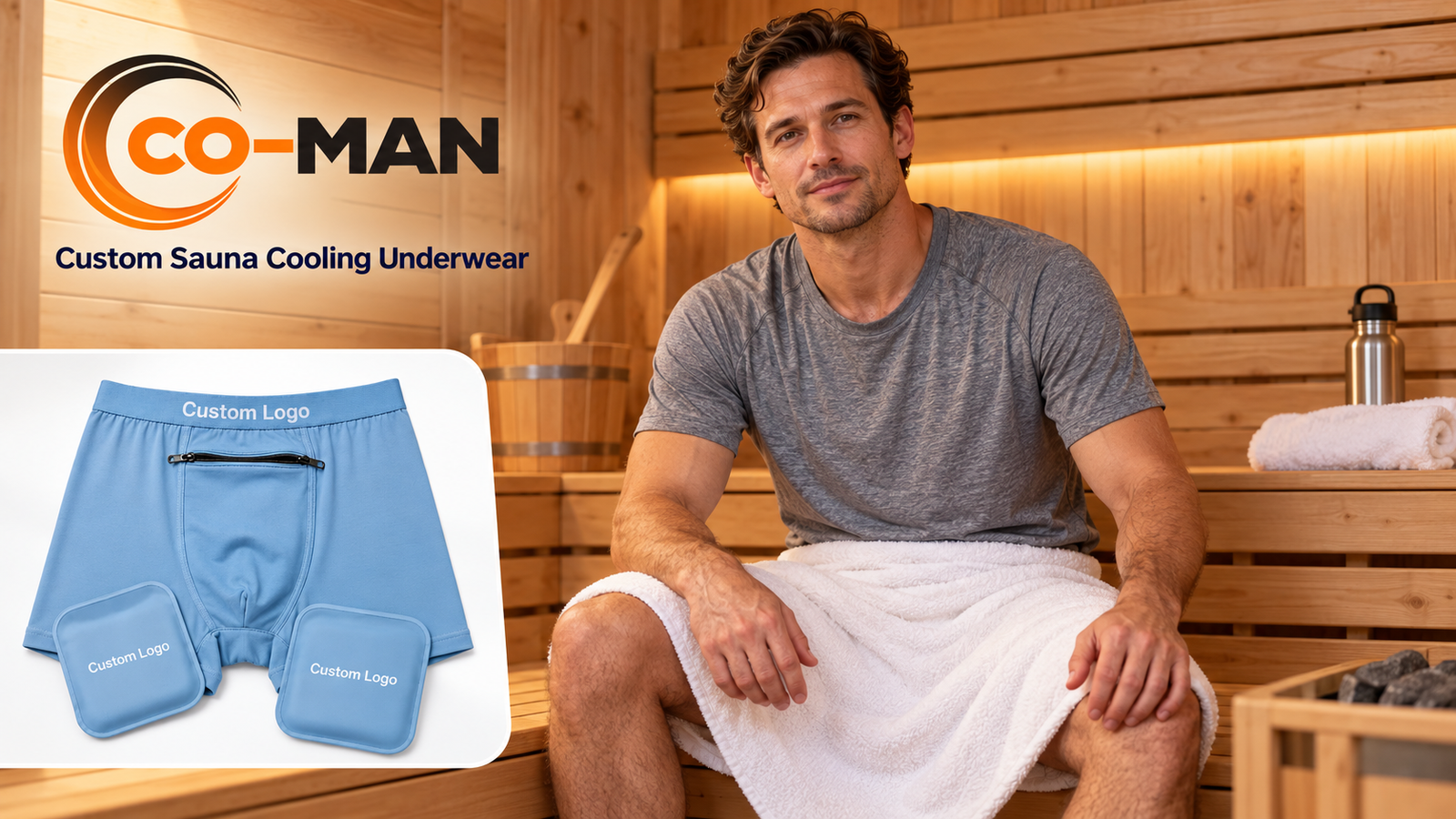
or brands developing a sauna-focused collection, cooling pouch underwear offers a specific product concept: combining a wearable garment with a removable cooling insert for localized cooling.
The development brief should explain where cooling is intended, how the insert should sit, and how customers will use the product during their sauna routine. These decisions guide pouch coverage, garment fit, and insert selection before sampling begins.
Key requirements to confirm:
Target customers, such as sauna users and wellness-focused consumers.
Intended cooling area and pouch placement.
Insert coverage and positioning when the wearer is seated.
Pouch stability when sitting down, standing up, or changing position.
Comfortable separation between the cooled insert and the skin.
Intended use conditions and the evidence needed for cooling-performance claims.
Evaluate the approved garment and insert together under defined conditions. Record insert preparation, ambient conditions, and temperature measurements when assessing cooling performance. This gives your brand a clearer basis for product descriptions and user instructions.
With 20 years of underwear manufacturing and customization experience,
CO-MAN helps private label brands develop cooling pouch underwear around their target market and product requirements. From pouch placement to fit adjustments and custom branding, we support the development of a differentiated collection.
Module 6 — Design for Easy Insert Use and Repeat Wear
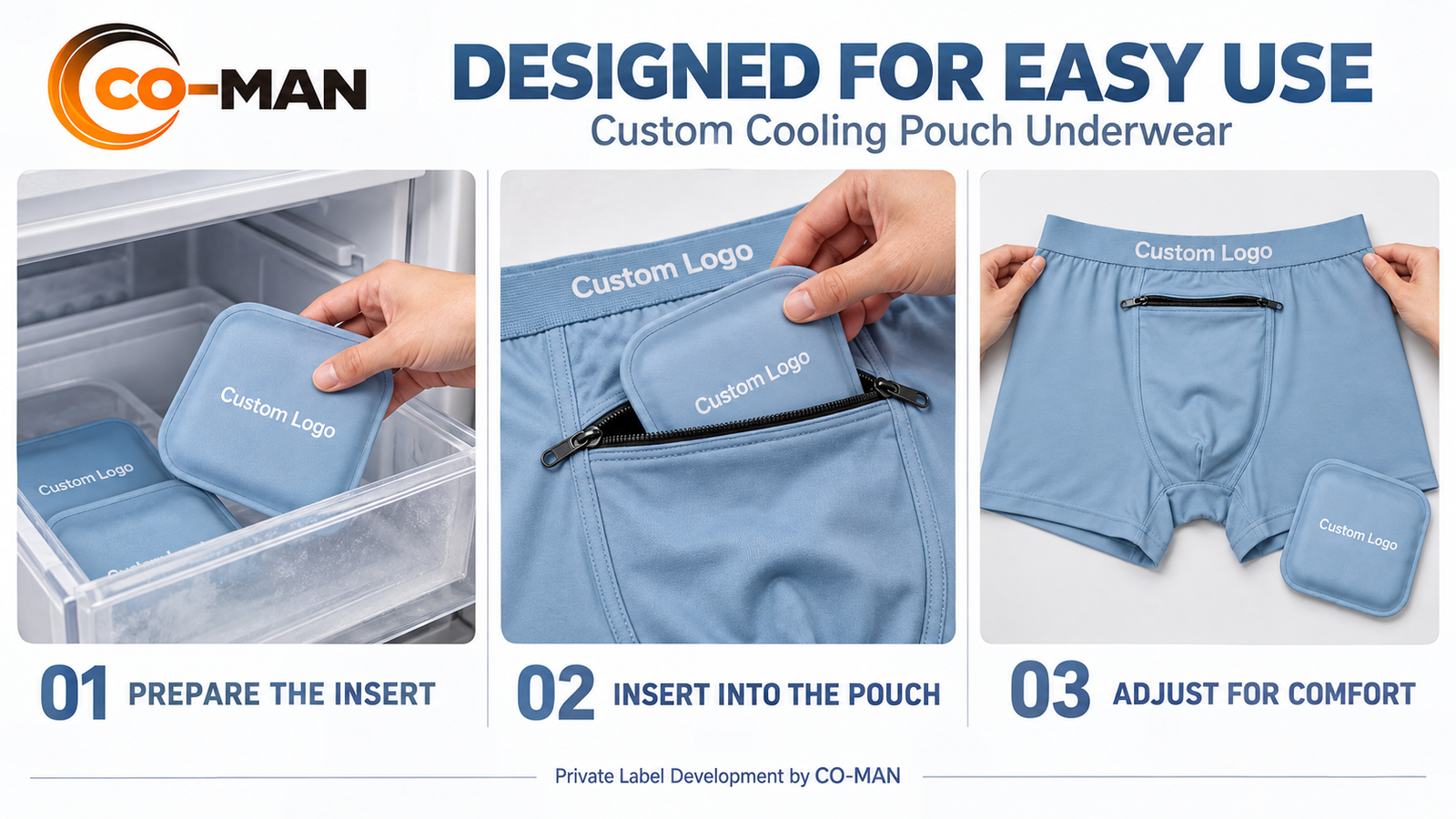
A clear preparation-and-use sequence can make cooling pouch underwear easier for customers to understand: prepare the insert according to its supplier’s instructions, place it inside the pouch, and adjust the garment for a comfortable fit.
For B2B buyers, this simple customer experience depends on carefully coordinated fabric, zipper, and pocket specifications. The opening must accommodate the intended insert, while the finished garment should remain comfortable and practical to maintain.
Key requirements to confirm:
Opening width that allows convenient insert placement and removal.
Zipper operation without catching the lining or insert cover.
Zipper placement and finishing that minimize rubbing against the skin.
Pocket dimensions that balance access, adjustment, and retention.
Main-body fabric, lining, and waistband specifications.
Washing instructions for the garment and separate care instructions for the insert.
Whether inserts are included, supplied separately, or offered as replacement accessories.
If your brand chooses a 100% cotton body, confirm its actual stretch, wearing allowance, and shrinkage during development. Specify the waistband and lining separately so material descriptions accurately reflect the finished product.
CO-MAN Custom Manufacturing Support
CO-MAN supports fabric selection, zipper sourcing, pouch development, sampling, and custom labels and packaging. Approved materials and construction details provide a consistent reference for bulk orders and repeat production.
Module 7 — Finalize Branding, Packaging, and User Instructions
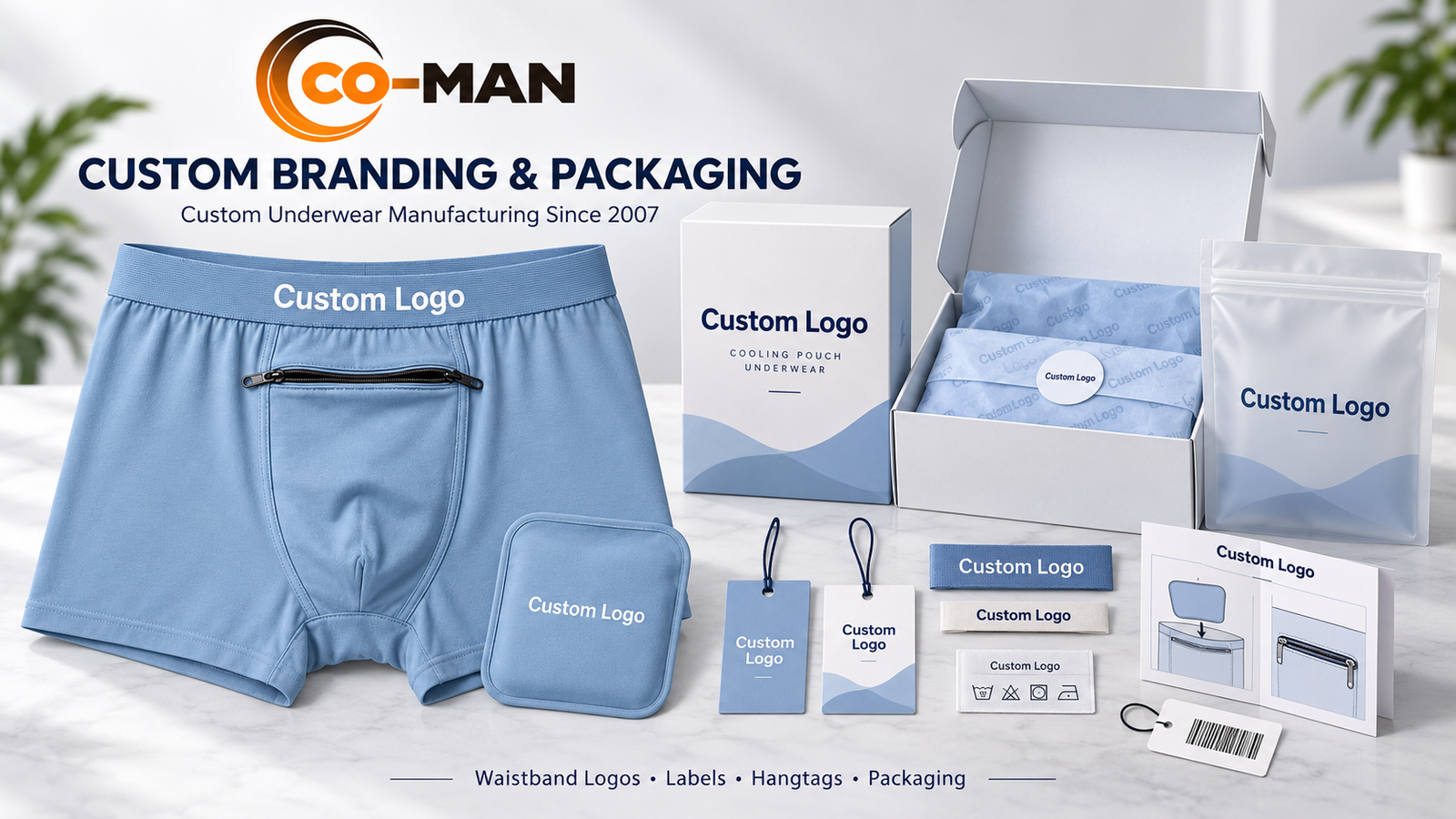
Branding and packaging should clearly communicate what the customer receives and how the product should be used. This is particularly important when the underwear and cooling insert are supplied separately.
Key requirements to confirm:
- Custom waistband logo, labels, and colors.
- Packaging contents and insert inclusion status.
- Instructions for inserting and removing the cooling pack.
- Garment washing and drying instructions.
- Cooling insert care and use instructions from its supplier.
- SKU identification, barcodes, and carton requirements.
Any stated cooling performance should be supported by testing. Clear product information helps brands set accurate expectations and reduce avoidable customer questions.
CO-MAN: Custom Underwear Manufacturing and Private Label Packaging Since 2007
Since 2007, CO-MAN has specialized in custom underwear production. With 20 years of underwear manufacturing and customization experience, we support brands and wholesale buyers with product development, private label branding, labels, and packaging.
For your cooling pouch underwear collection, we help coordinate the details that bring your brand to the finished product: custom waistband logos, brand labels, care labels, hangtags, packaging bags, and printed boxes. Our extensive packaging and labeling experience helps align these elements with your brand identity and order requirements.
Confirming artwork, label placement, and packaging details before bulk production helps reduce packing errors and creates a consistent reference for repeat orders.
Conclusion — Clear Specifications Build a More Reliable Cooling Underwear Product
Successful cooling pouch underwear development depends on the coordination of pouch construction, insert compatibility, fabric selection, and garment fit.
For B2B buyers, confirming these details before manufacturing helps reduce repeated sample revisions, unclear quotations, and bulk production discrepancies. A documented specification and an approved sample give both the brand and the manufacturer a consistent reference for production and future orders.