
CO-MAN Underwear Team
A senior marketing expert from CO-MAN with 18 years of experience in custom underwear.
5 Quality Control Tips to Avoid Defects in Bulk Underwear Production
Quality control in men’s underwear manufacturing is not optional. It is a procurement risk management strategy.
Below are five proven quality control practices that help wholesale buyers avoid costly production defects.
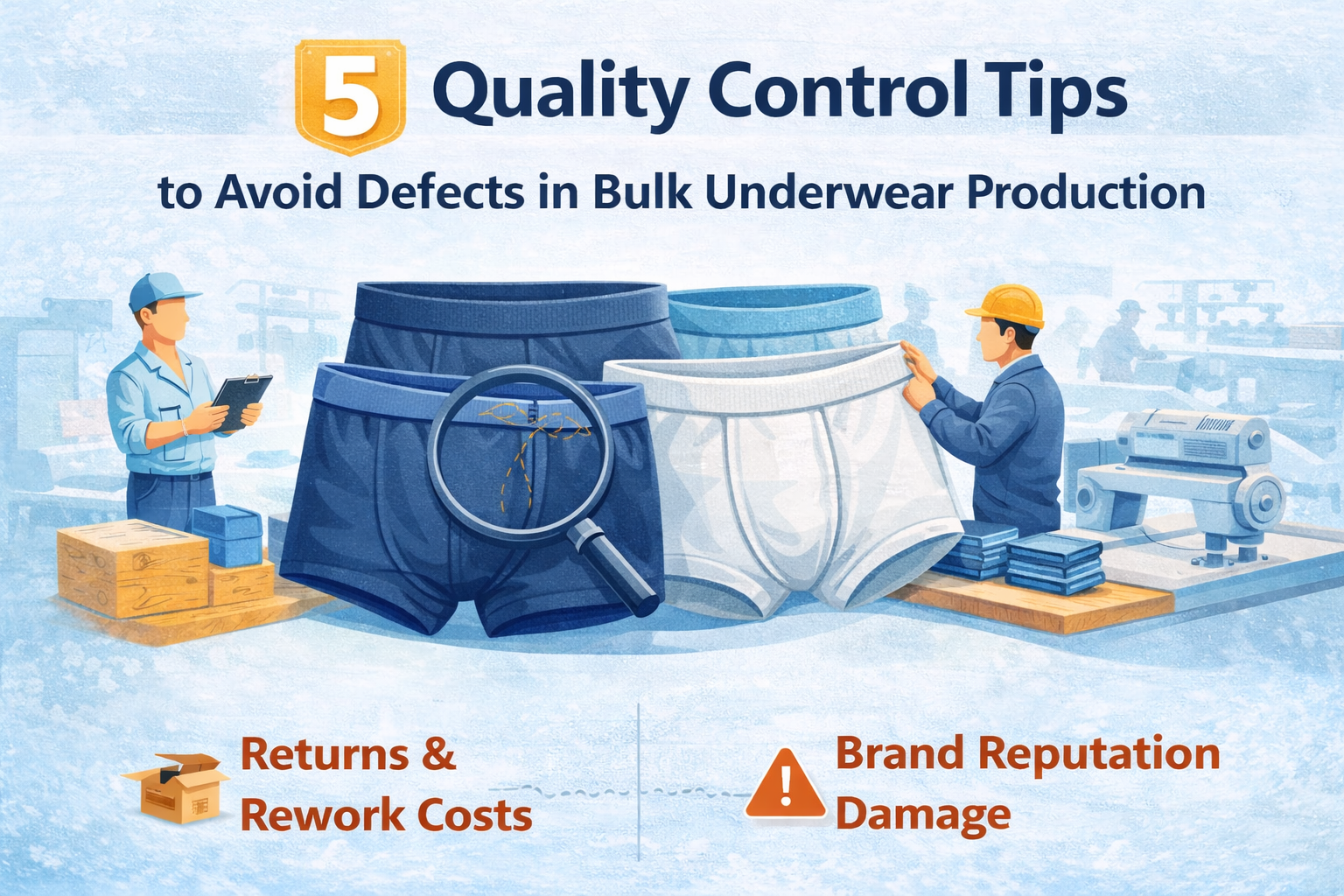
Table of contents
Module 1—Standardize Fabric Inspection Before Cutting
Why Fabric Issues Multiply in Bulk Orders
Fabric is the foundation of men’s underwear quality. If fabric defects pass initial inspection, For wholesale buyers placing 10,000+ unit orders, undetected fabric defects can multiply into large-scale return risks and retailer disputes.
Common Fabric-Related Defects:
Inconsistent fiber composition across batches
Color variation (shade banding)
Excessive shrinkage after washing
Uneven stretch and recovery
In bulk production, even small fabric deviations can affect thousands of units.
Quality Control Action Plan
Conduct batch-by-batch fabric testing
Verify GSM, stretch ratio, and shrinkage tolerance
Check colorfastness and dye uniformity
Confirm compliance with skin-contact safety standards
Certified and pre-tested fabrics significantly reduce downstream production risk.
Why CO-MAN Prioritizes Fabric Control Before Bulk Cutting
CO-MAN Fabric Quality Control Advantages Include:
Batch-by-batch fabric testing to ensure fiber composition consistency
GSM, stretch ratio, and shrinkage verification before bulk cutting
Colorfastness and dye uniformity checks to avoid shade variation in mass production
Elastic recovery testing for performance and long-term durability
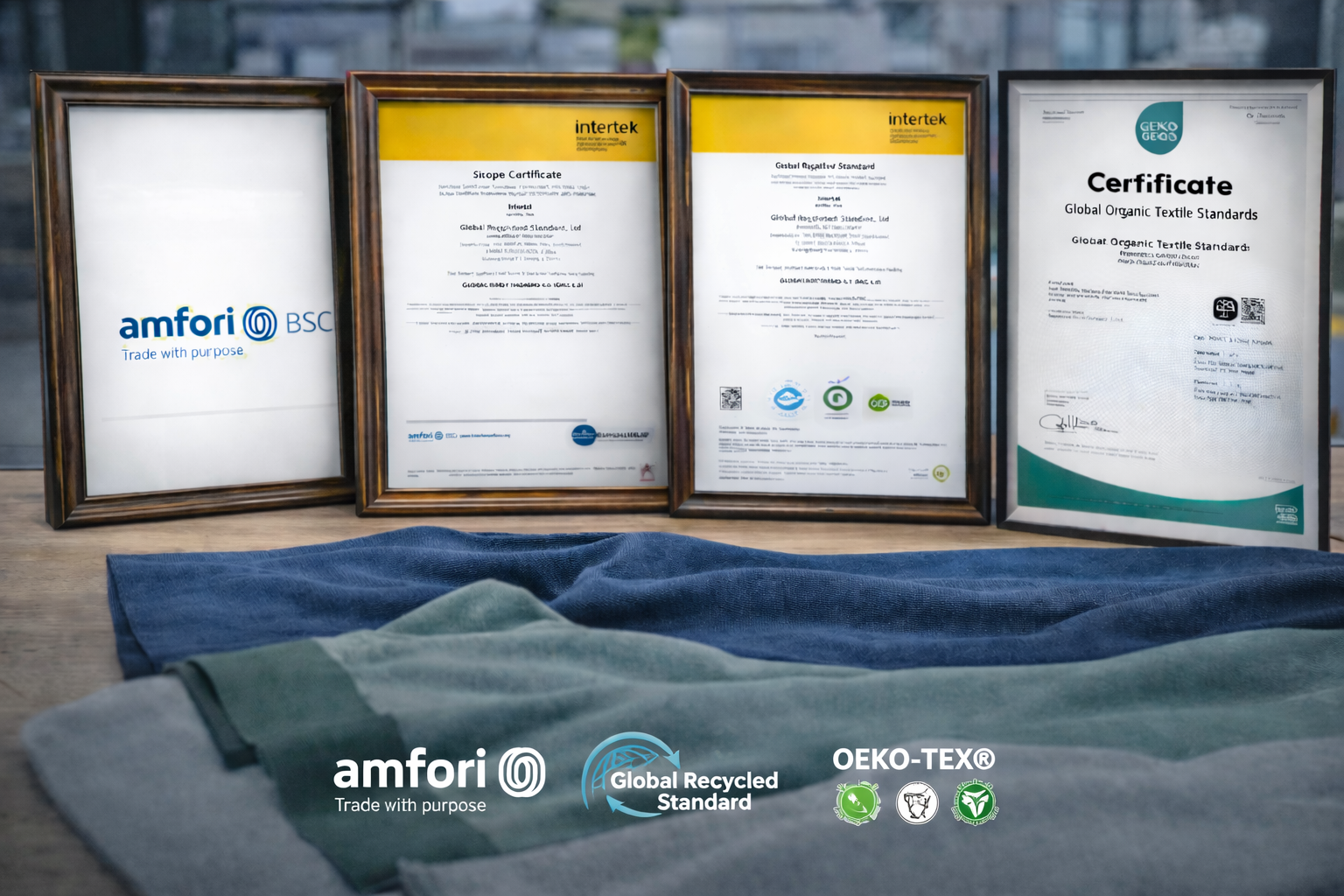
Compliance confirmation with skin-contact safety standards (OEKO-TEX, GRS where applicable)
- Get in Touch →
Inspection Item | Control Method | Risk Prevented |
GSM verification | Lab testing | Lab certification |
GSM verification | Lab testing | Fit inconsistency |
Colorfastness | Wash test | Size disputes |
Fiber composition | Rub & wash test | Brand damage |
CO-MAN’s Pre-Cutting Fabric Inspection Checklist
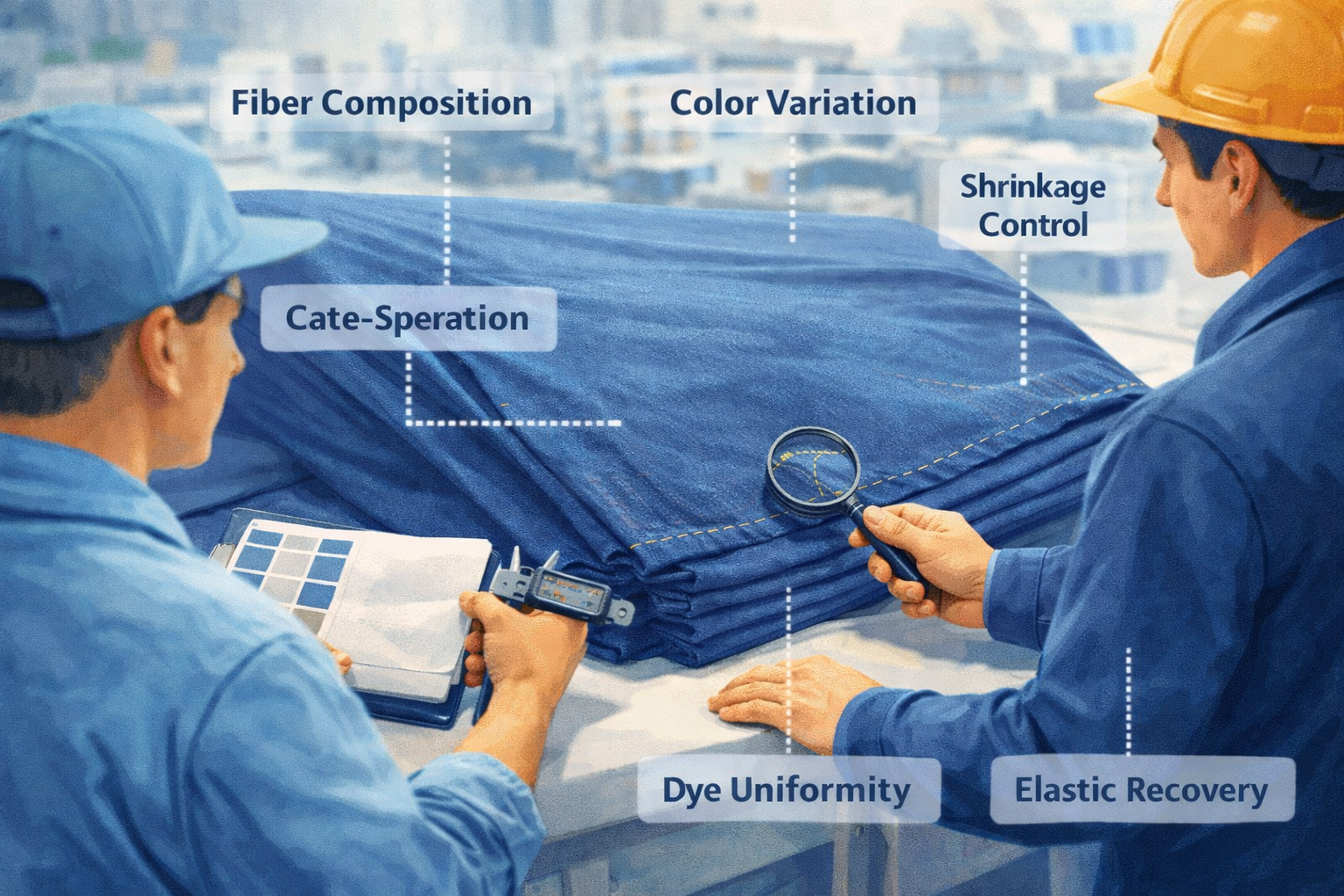
CO-MAN’s Fabric Quality Inspection Process
Module 2—Lock Down Approved Samples as Production Benchmarks
The “Approved Sample Gap” Problem
Many defects occur because bulk production drifts away from the approved prototype.
Common causes include:
Unclear technical specifications
Tolerance misinterpretation
Pattern grading errors
Elastic replacement without approval
Bulk underwear must strictly follow the approved sample as the production benchmark.
Why CO-MAN’s Sample Control System Protects Your Bulk Orders
To eliminate this risk, CO-MAN implements a strict sample-to-bulk locking system:
✔️ Every approved sample is digitally archived with full technical specifications
✔️ Tolerance ranges are clearly documented and signed off before mass production
✔️ Pattern grading rules are double-checked before bulk cutting
✔️ Elastic bands and key components cannot be substituted without written approval
✔️ Pre-production samples (PPS) are reconfirmed before large-scale manufacturing
Our technical team ensures that bulk production strictly follows the approved prototype, not just visually—but in construction, measurements, elasticity balance, and stitching details.
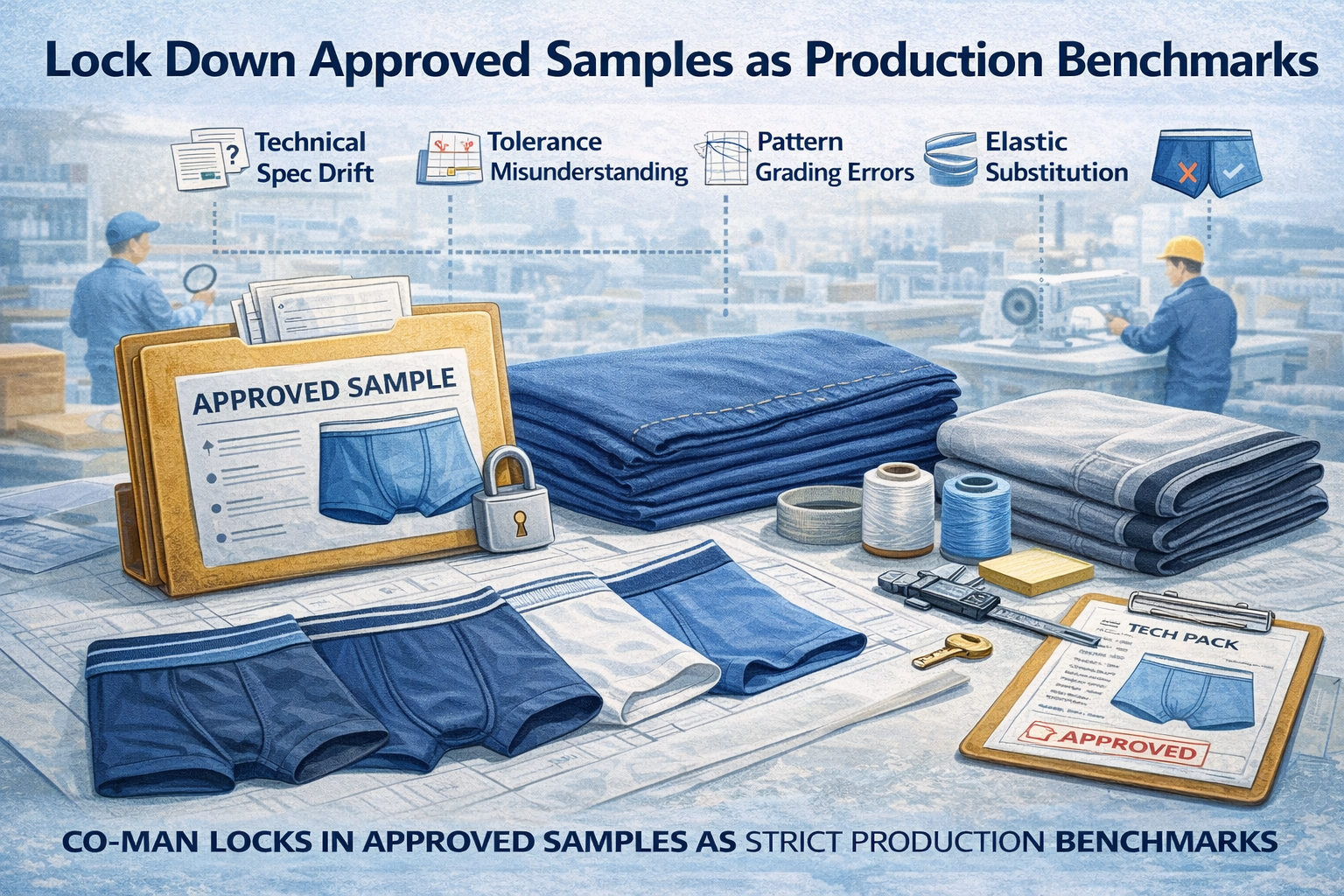
CO-MAN’s Production Standards
Module 3—Focus on Elastic Waistband Performance Testing
The Most Failure-Prone Component in Underwear
The waistband is the most common defect area in men’s underwear production.
Typical bulk defects include:
Weak elasticity after washing
Logo cracking or fading
Uneven tension
Rolling or twisting after wear
Even if fabric quality is acceptable, elastic failure often leads to bulk rejection.
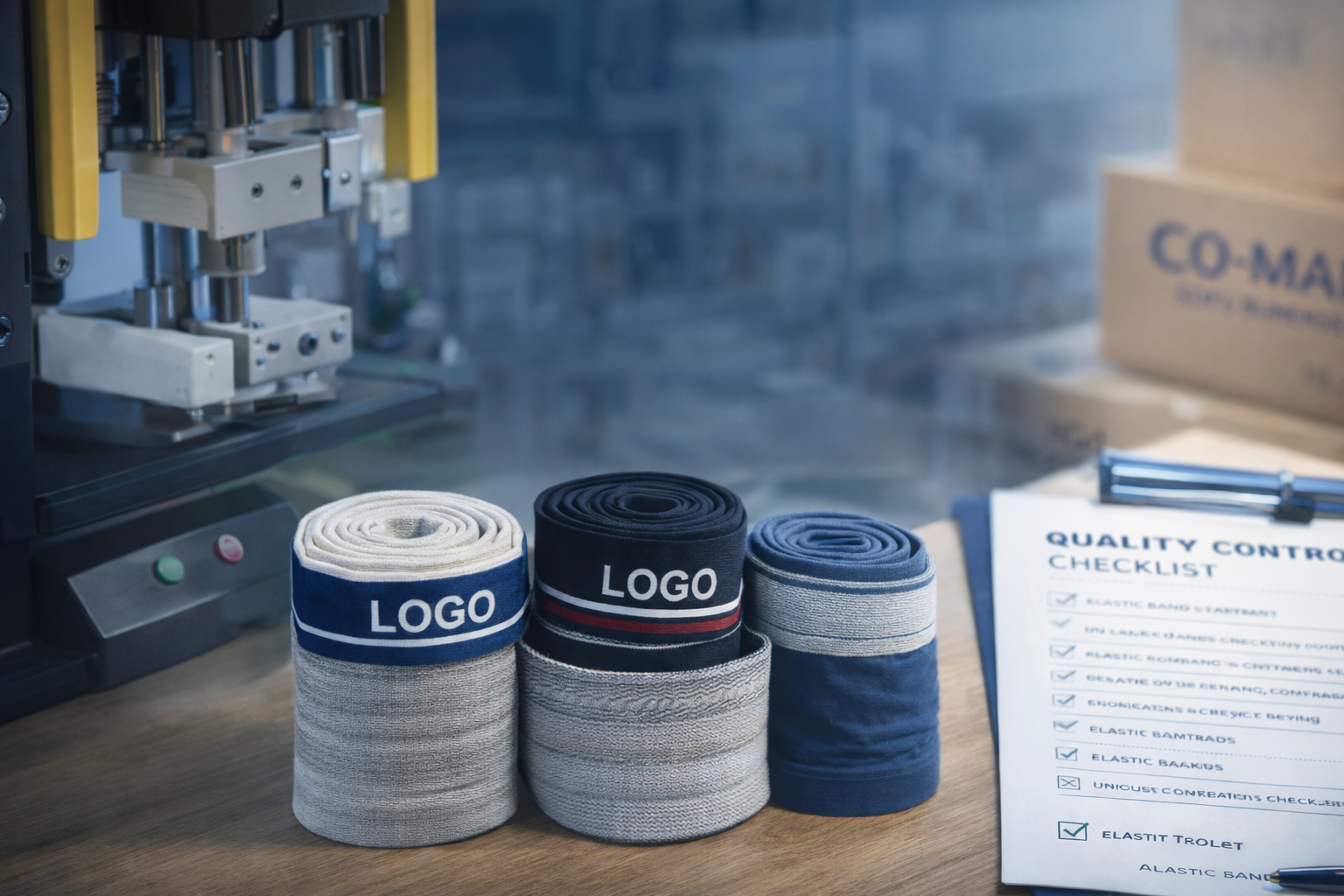
CO-MAN Elastic Waistband Quality Control Measures
To prevent bulk defects caused by weak or unstable waistbands, CO-MAN implements the following control actions:
1. Elastic Material Qualification
Pre-approval of elastic suppliers with long-term cooperation
Verification of fiber composition (polyester, nylon, spandex ratio)
Incoming batch inspection before warehouse acceptance
2. Stretch & Recovery Testing
Multi-cycle stretch testing before bulk cutting
Recovery rate measurement after repeated tension release
Tension tolerance control within defined technical standards
3. Wash & Durability Simulation
Elastic retention testing after wash cycles
Shrinkage and deformation control verification
Anti-rolling and anti-twisting structural checks
- Get in Touch →
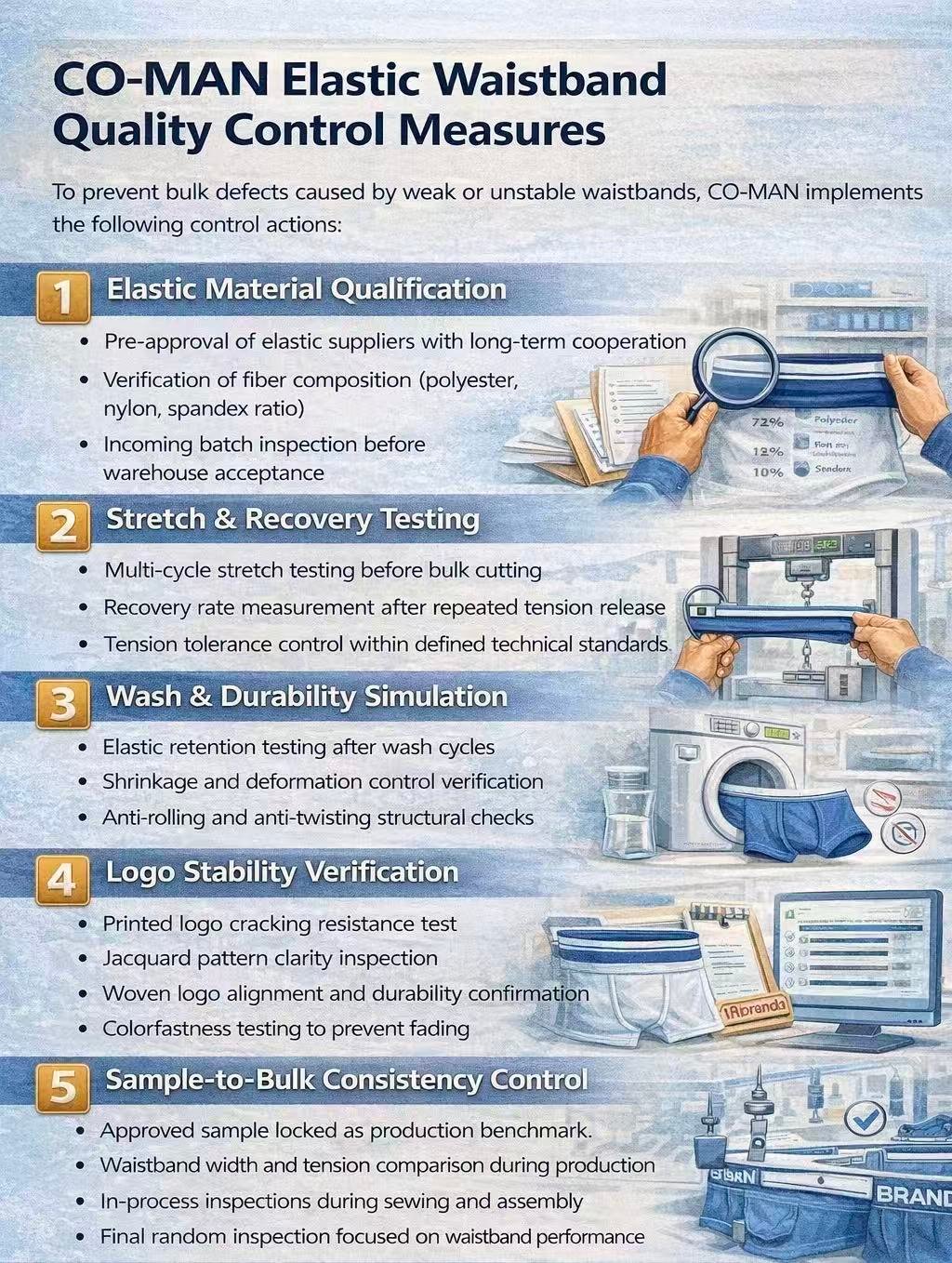
Analysis of CO-MAN Waist Belt Quality Control Measures
Module 4—Implement In-Process Inspection During Sewing
Why Final Inspection Is Not Enough
Relying only on final inspection is risky in large orders.
In-process defects include:
Misaligned stitching
Uneven seam tension
Incorrect pouch construction
Size labeling mistakes
Once 10,000 units are sewn, correction becomes expensive.
CO-MAN In-Process Quality Control Measures (During Sewing Stage)
1. Pre-Production Sewing Briefing System
Conduct a technical briefing before bulk production begins
Clearly define stitch density (SPI), thread specifications, and waistband assembly standards
Use an approved “Gold Sample” as the sole production benchmark
2. In-Line QC Checkpoints (Beyond Final Inspection)
Assign dedicated in-line QC inspectors to each production line
Perform semi-finished product inspections every 1–2 hours
Conduct focused inspections on critical areas (waistband, pouch, leg openings)
3. Stitching Accuracy Control
Standardize stitch density (e.g., 13–14 SPI for elastic fabrics)
Calibrate sewing machine tension settings regularly
Replace needles periodically to prevent skipped stitches and thread breakage
4. Elastic & Seam Tension Monitoring
Monitor waistband tension balance in real time
Control seam elasticity alignment between side panels and pouch construction
Prevent over-tight stitching that may cause discomfort or post-wash deformation
- Get in Touch →
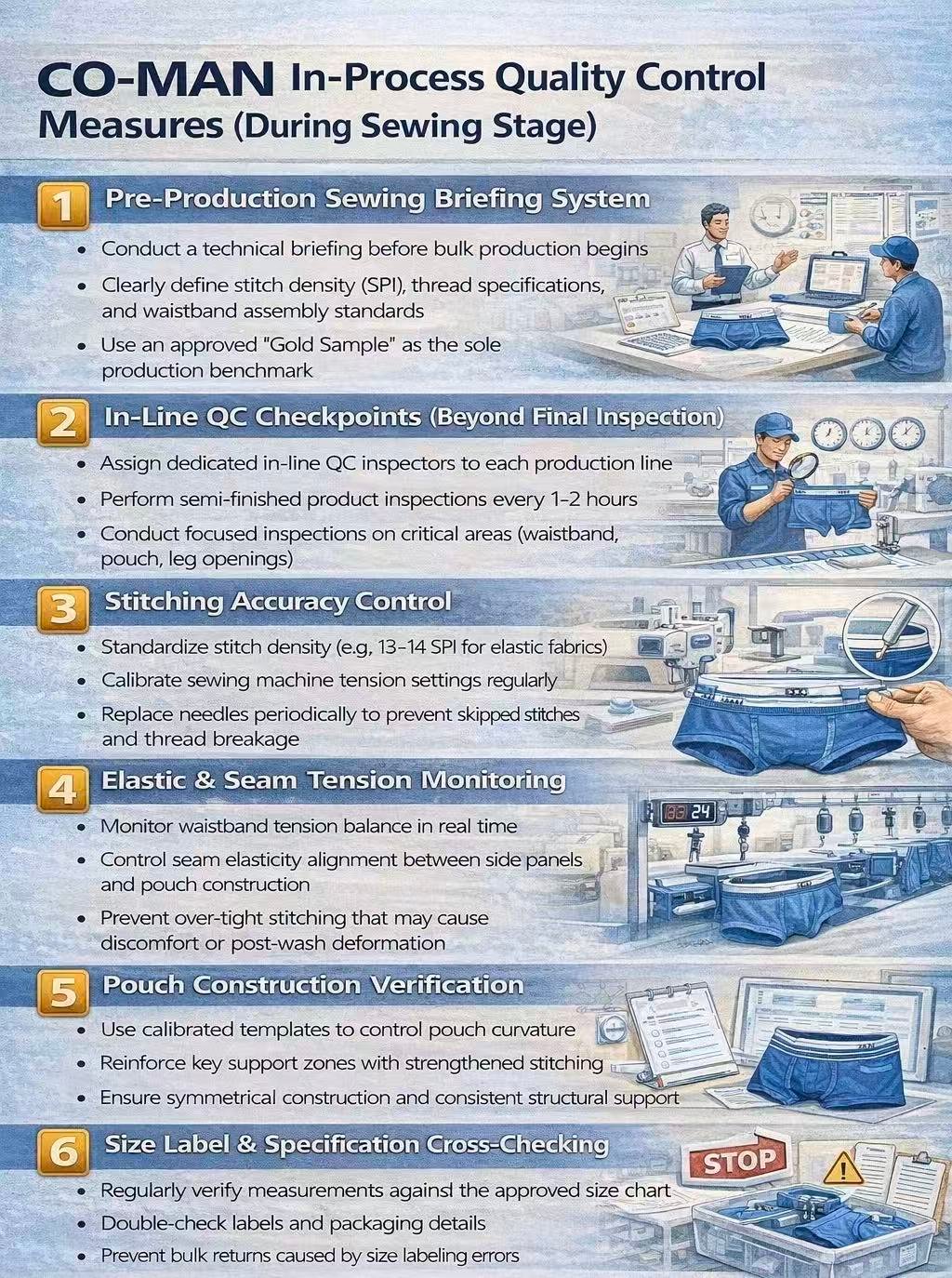
CO-MAN Production Process Quality Control Measures
Module 5—Conduct Random AQL-Based Final Inspection
Bulk Orders Require Statistical Quality Control
Final inspection must follow recognized AQL standards.
For men’s underwear production, this includes:
Size tolerance verification
Visual defect detection
Elastic functionality test
Packaging accuracy check
Barcode and labeling confirmation
AQL sampling ensures consistency before shipment.
Why AQL Matters for B2B Buyers
Wholesale buyers face:
Retail audit requirements
Distributor quality standards
Marketplace compliance checks
A structured AQL inspection reduces supply chain disputes and protects brand credibility.
CO-MAN’s AQL-Based Final Inspection System for Bulk Men’s Underwear Orders
1. Strict AQL Sampling Protocol
Inspections conducted according to international AQL standards
Random sampling based on order quantity
Clearly defined defect classification (Critical / Major / Minor)
2. Size & Fit Verification
Measurement tolerance checks across graded sizes
Random waistband elasticity and recovery testing
Pouch construction accuracy validation
3. Visual & Functional Quality Control
Stitching alignment and seam tension review
Logo clarity and waistband branding inspection
Fabric surface defect detection (shade variation, stains, holes)
4. Elastic Performance Testing
Stretch & recovery cycle checks
Post-wash elasticity retention confirmation
Tension consistency across production batches
- Get in Touch →
Inspection Stage | Standard | Purpose |
Pre-production | Approved sample | Lock benchmark |
In-process | Random inline checks | Early defect control |
Final Inspection | AQL 2.5 Level II | Shipment approval |
Pre-shipment | Packaging audit | Retail compliance |
CO-MAN’s AQL Inspection Framework
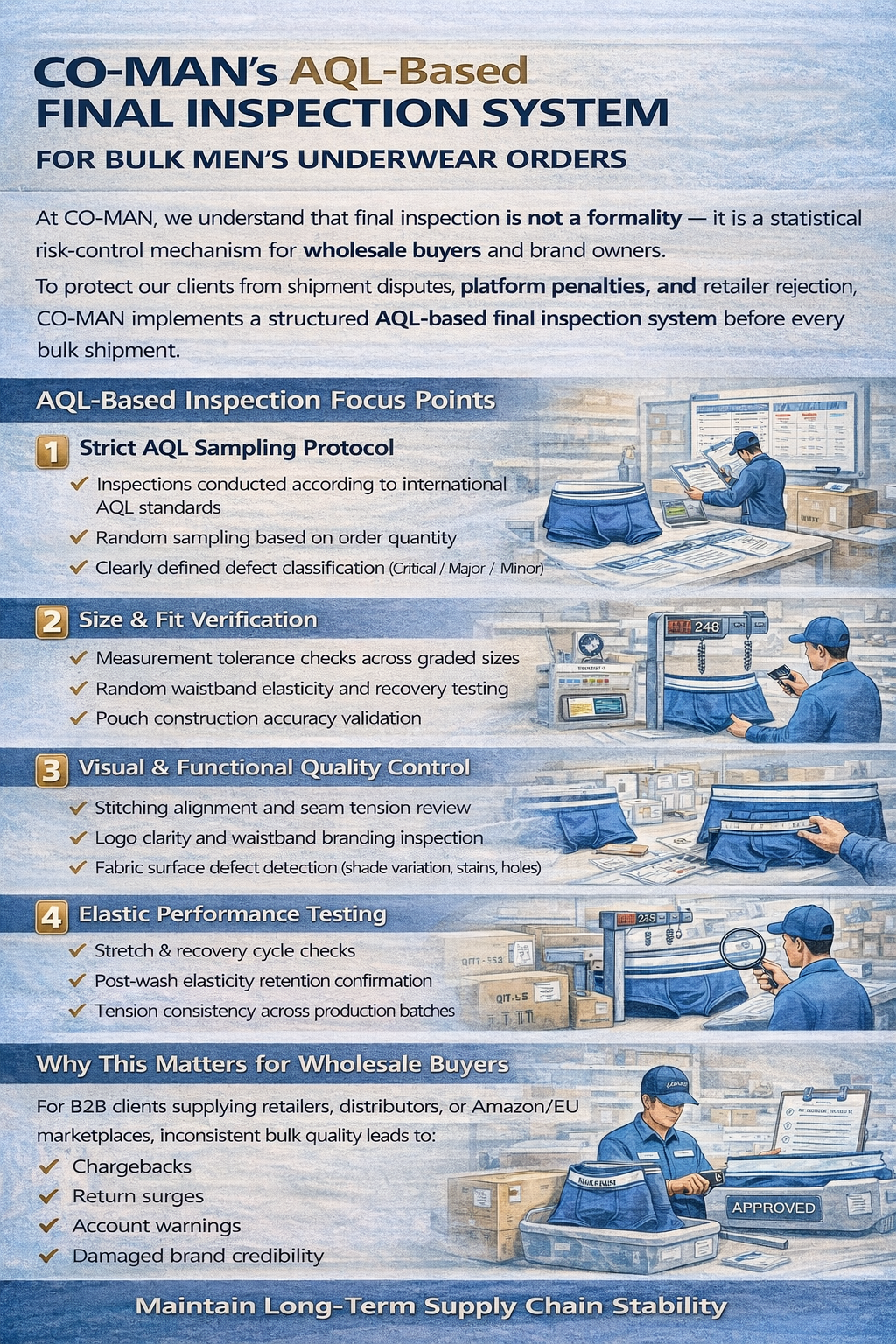
CO-MAN’s AQL Final Inspection System
Conclusion—Prevent Defects Before They Reach Your Warehouse
Bulk underwear production defects are expensive—but preventable.
To minimize risk, B2B buyers should ensure:
Fabric batch verification before cutting
Strict alignment with approved samples
Professional elastic waistband testing
In-process sewing inspections
AQL-based final quality control
Men’s underwear is a direct skin-contact product. Small production deviations quickly translate into large-scale return risks.
Strong quality control systems protect your margins, your partners, and your brand reputation.
Common Problem in Bulk Production | Root Cause | Risk for B2B Buyers | CO-MAN’s Control Solution |
Fabric shade variation | Inconsistent dye lots | Retail rejection, marketplace complaints | Batch-by-batch fabric inspection and shade band testing before cutting |
Excessive shrinkage after washing | Unverified fabric shrink rate | Retail rejection, marketplace complaints | Pre-production wash testing with shrinkage tolerance control (within approved spec) |
Inconsistent fiber composition | Uncertified or mixed material batches | Compliance risks (EU/US standards) | Certified fabric sourcing (OEKO-TEX/GRS where applicable) and supplier verificatio |
Waistband elasticity weakening | Low-grade elastic or poor recovery rate | Early product failure, brand damage | Elastic stretch & recovery cycle testing before bulk approval |
Waistband elasticity weakening | Poor print durability | Early product failure, brand damage | Elastic stretch & recovery cycle testing before bulk approval |
Common Bulk Production Issues & CO-MAN Solutions